Introduction
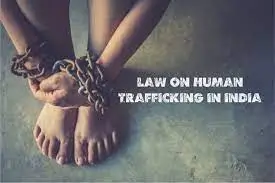
Human trafficking is a heinous crime that affects lots of people around the world, including India. Uttar Pradesh, the most dense state in India, has become a hotbed of human trafficking, with thousands of victims being trafficked each year.
Victims of human trafficking may experience several consequences, including post-traumatic stress, difficulty in relationships, depression, sexual exploitation, and even death. In this article, we will explore the issue of human trafficking in Uttar Pradesh and its impact on society.
What is Human Trafficking?
Human trafficking is the illegal trade of human beings for various purposes. The United Nations defines human trafficking as “the recruitment, transportation, transfer, harbouring, or receipt of persons by means of threat, use of force or other forms of coercion, of abduction, of fraud, of deception, of the abuse of power, or of a position of vulnerability, or of the giving or receiving of payments or benefits to achieve the consent of a person having control over another person, for the purpose of exploitation.”
Human Trafficking in Uttar Pradesh
Uttar Pradesh is a prime destination for human trafficking in India due to its large population, poverty, and lack of education. According to a report by the National Crime Records Bureau (NCRB), Uttar Pradesh has the highest number of cases of human trafficking in India, with 3,075 cases reported in 2019 alone. However, it is believed that the actual number of cases is much higher, as many cases go unreported.
Victims of Human Trafficking in Uttar Pradesh
Victims of human trafficking in Uttar Pradesh are predominantly women and children who are lured with false promises of better employment opportunities, education, or marriage. They are then sold into forced labour, domestic servitude, or sexual exploitation. Many victims are also subjected to physical and emotional abuse, and forced to work in hazardous conditions.
Consequences of Human Trafficking
The consequences of human trafficking are devastating for the victims and their families. Victims often suffer from physical and emotional trauma, including anxiety, depression, and post-traumatic stress disorder (PTSD). They may also develop health problems from working in hazardous conditions or being subjected to sexual exploitation.
Human trafficking also has a significant impact on society. It fuels the growth of the illegal economy, encourages corruption, and undermines human dignity. It also perpetuates poverty, as many victims come from poor families and are forced to work in slave-like conditions with little or no pay.
Government Initiatives
To combat human trafficking in Uttar Pradesh, the state and central government of India has taken several measures. The government has set up anti-human trafficking units, which work closely with local law enforcement agencies to identify and rescue victims of human trafficking.
The government has also enacted several laws to prevent human trafficking, such as the Immoral Traffic (Prevention) Act, 1956, which criminalises prostitution and related activities, and the Bonded Labour System (Abolition) Act,1976, which prohibits bonded labour.
However , despite these efforts, human trafficking continues to be a serious problem in the U.P. There is a need for increased awareness and education about the dangers of human trafficking, and for stronger enforcement of existing laws. Civil society organizations (NGOs) also have a crucial role to play in preventing human trafficking and supporting its victims.
Conclusion
Human trafficking is a grave human rights violation that affects millions of people around the world. Uttar Pradesh has become a hotbed of human trafficking in India, with thousands of victims being trafficked each year.
This heinous crime has several consequences, including physical and emotional trauma, forced labour, sexual exploitation, and even death.
To combat human trafficking, there needs to be a multi-faceted approach involving the government, law enforcement agencies, civil society organizations, and the community. Only through collective action can we hope to end this modern-day slavery and protect the rights and dignity of every human being.