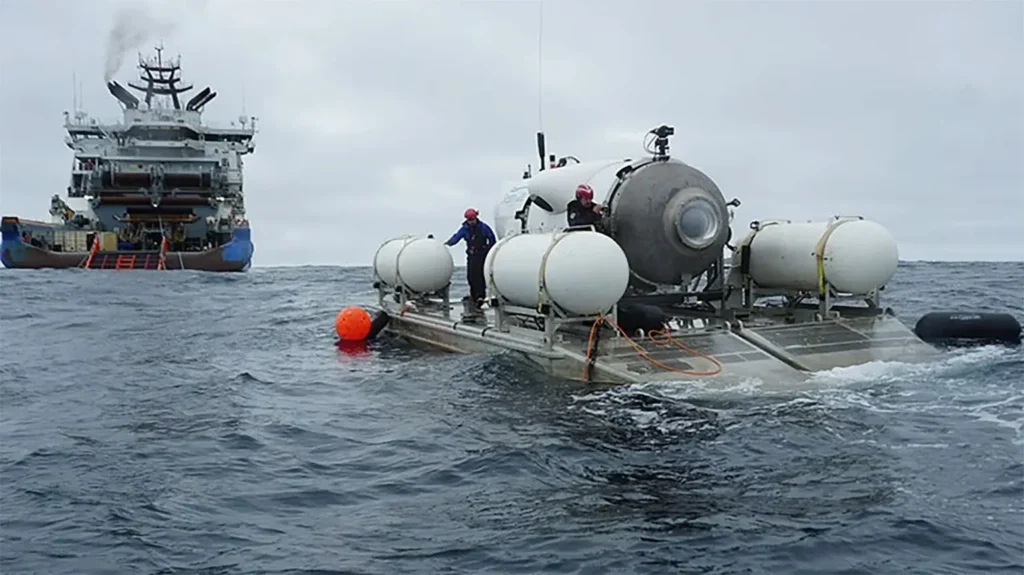
OceanGate tows its Titan submersible out from the company’s home base in Everett, Wash., for a test in Puget Sound in preparation for its first Titanic dive in 2021. (OceanGate Photo).
OCEAN GATE TITAN: Legal Implication and Regulation for The Deep-sea exploration in International water.
This research paper examines OCEANGATE TITAN legal implications and regulations surrounding the operation of deep-sea
exploration. Focus on understanding the specific legal framework and regulation that governs the use and operation of deep-sea exploration considering factors such as environmental impact liability in case of accident or damages and any potential conflict with existing Maritime law at the international level and to see what safety protocol was taken.
INTRODUCTION
Background information about Ocean Gate Titan
Ocean Gate is an American privately owned company based in Everett, Washington, which provided crewed submersibles for tourism, industry, research, and exploration. The company was founded in 2009 by Stockton Rush and Guillermo sohnlein.
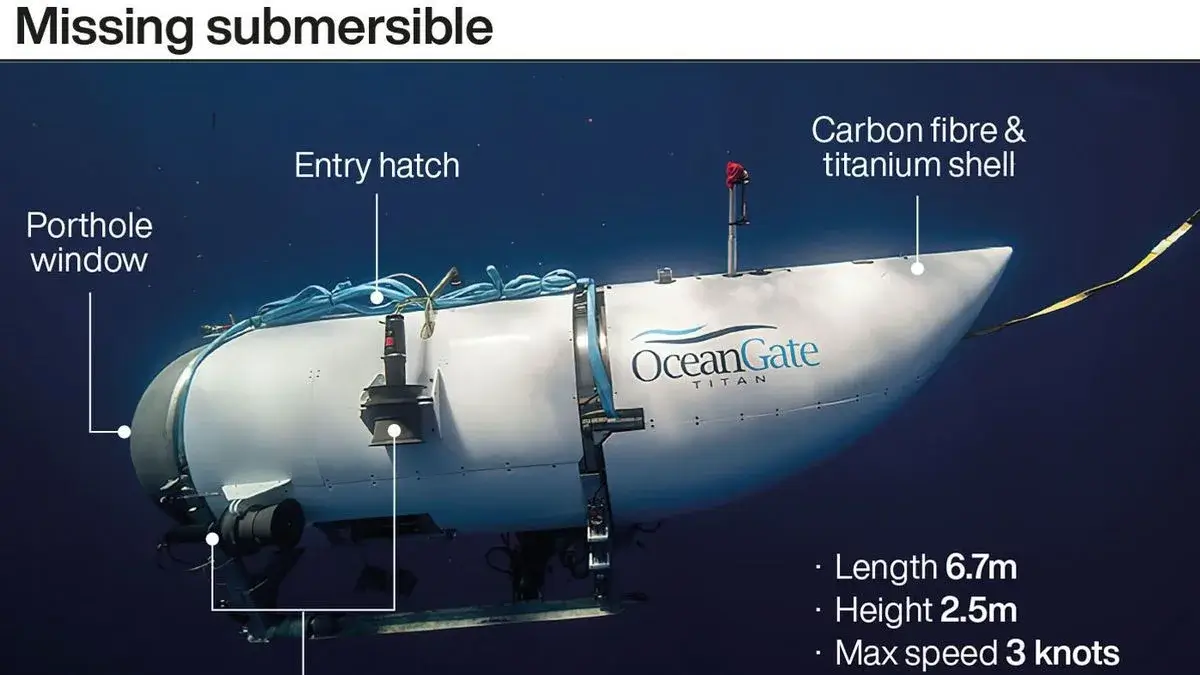
The company acquired two submersible vessels- titan and cyclops. Titan was an experiment that imploded on 18 June 2023 while transporting tourists to visit the wreckage of the Titanic. It was the first privately-owned submersible with a claimed maximum depth of (13,000 ft), and the first completed crewed submersible with a hull constructed of titanium and carbon
fibre composite materials. After testing with dives to its maximum intended depth in 2018 and 2019, the original composite hull
of Titan developed fatigue damage and was replaced by 2021. In that year, Ocean Gate began transporting paying customers to the wreck of Titanic, completing several dives to the wreck site in 2021 and 2022. During the submersible’s first expedition in 2023, all five occupants were killed when the Titan imploded. Ocean Gate lost contact with Titan and contacted authorities later that day after the submersible was overdue for return. A massive international search and rescue operation ensued and ended on 22 June, when debris from Titan was discovered about 1,600 feet (500 metres) from the bow of the Titanic.
Literature review
The Titan submersible and potential litigation By Chris Tidball
This article talk about what legal liability can occurs. Criminal defense attorney Joshua Ritter told the Daily Mail that “if an investigation reveals the participants were misled about the risks or pressured to agree to activities they would normally avoid, then it can lead to criminal charges. For the company to use a video game controller to steer this submarine, that’s the kind of thing that makes this ripe for an investigation.” He compared this situation to a 2009 case in which three people died at an Arizona sweat lodge. In that case, the participants entered willingly but the entrepreneur who ran the lodge was convicted of negligent homicide.
Investigation Raises Safety Concerns In Catastrophic Implosion Of Submersible Titan by outlook webdesk.
In this we get to know how company reacted toward safety of passengers OceanGate fired employee David Lochridge in 2018 after he raised concerns about the safety of their submersible, the Titan. Lochridge filed a whistleblower complaint with the Occupational Safety and Health Administration, leading to OceanGate suing him for breaching his employment contract. In response, Lochridge alleged that he was wrongfully terminated and that his actions aimed to ensure passenger safety. He claimed that the Titan lacked sufficient testing of its hull and that hazardous materials were being used inside the submersible
without passenger knowledge. Lochridge believed that OceanGate’s decisions could potentially subject passengers to extreme danger. The two sides settled their court case in November 2018.
Books
The Geopolitics of Deep Oceans
By John Hannigan
International Law and the Genetic Resources of the Deep
Sea
By David Kenneth Leary
In this book it examines a range of emerging activities in the deep sea including bioprospecting, marine scientific research, mining and tourism and considers the effectiveness of existing international law and governance mechanisms to sustainably manage these activities. It includes a detailed examination of the nature and extent of bioprospecting in the deep sea and its relationship with other activities such as marine scientific research. The book sets out in detail suggestions for how international law and policy regimes could respond to these challenges.
In this book it examines a range of emerging activities in the deep sea including bioprospecting, marine scientific research, mining and tourism and considers the effectiveness of existing international law and governance mechanisms to sustainably manage these activities. It includes a detailed examination of the nature and extent of bioprospecting in the deep sea and its relationship with other activities such as marine scientific research. The book sets out in detail suggestions for how international law and policy regimes could respond to these challenges.
Research Methodology
Statement of the problem
The statement of problem regarding the issue Ocean Gate Titan can be:
- Lack of Safety Features: The Ocean Gate Titan submarine lacks certain safety features that are essential for underwater exploration and can pose risks to the occupants in case of emergencies.
- High Maintenance Costs: The maintenance and upkeep costs associated with the Ocean Gate Titan are significantly high, making it inaccessible for many research organizations or individuals with limited budgets.
- Lack of Customization Options: The Ocean Gate Titan may not offer sufficient customization options to meet the specific needs and requirements of various research projects, limiting its applicability in different scientific disciplines.
- Environmental Impact: The environmental impact of the Ocean Gate Titan and its operations needs to be assessed to understand any potential negative effects on marine ecosystems and to devise necessary mitigation strategies.
- Lack of Public Awareness: There may be a lack of public awareness and outreach concerning the Ocean Gate Titan, limiting its potential for public engagement, education, and support.
- Regulatory Compliance: Concerns may arise regarding the Ocean Gate Titan’s compliance with international regulations and standards for underwater exploration, safety, and environmental impact mitigation.
- Funding and Support: The issue of funding and support for the research, development, and operation of the Ocean Gate Titan can pose challenges to its continued availability and advancement in the field ofocean exploration.
PURPOSE OF RESEARCH
The purpose of researching the legal implications of the Ocean Gate Titan is to assess and understand the legal framework and regulations that govern the operation and use of underwater exploration technology. This research aims to identify any legal requirements, restrictions, or potential liabilities associated with the use of such technology and to ensure compliance with applicable laws and regulations. By examining the legal implications:
- Determine the legal responsibilities and liabilities of the operators, manufacturers, and users of the Ocean Gate Titan, including any potential environmental impact or damage caused by its operations.
- Identify any permits, licenses, or certifications required for operating the Ocean Gate Titan in different regions, waters, or jurisdictions, ensuring compliance with international, national, and local regulations.
- Explore any legal restrictions or limitations on the use of the Ocean Gate Titan, particularly in sensitive or protected marine areas, to ensure responsible and sustainable exploration practices.
- Analyse any existing legal frameworks or international agreements relevant to underwater exploration and the use of advanced technologies like the Ocean Gate Titan, contributing to ongoing discussions and potential improvements in regulations and policies.
Ultimately, researching the legal implications of the Ocean Gate Titan can help stakeholders, including manufacturers, operators, researchers, and policymakers, navigate the legal landscape surrounding underwater exploration and ensure the safe, responsible, and compliant use of such technology.
RESEARCH OBJECTIVES
The objectives of the research regarding the legal implications of the Ocean Gate Titan can include:
- Understand Applicable Laws and Regulations: The research aims to identify and comprehend the existing legal framework and regulations that govern the operation and use of underwater exploration technology.
- Evaluate Compliance Requirements: The research seeks to assess the legal requirements, permits, licenses, certifications, and compliance obligations associated with operating the Ocean Gate Titan. This includes understanding the necessary legal procedures and documentation needed to obtain permission for exploration activities.
- Identify Potential Liabilities and Responsibilities: By examining the legal implications, the research aims to determine the legal
responsibilities and liabilities of the operators, manufacturers, and users of the Ocean Gate Titan. This includes analysing potential environmental impacts, safety concerns, and damage mitigation procedures. - Propose Policy and Regulatory Recommendations: Based on the research findings, the objective is to propose policy recommendations and potential improvements to the existing legal framework. This can include suggestions for regulatory frameworks, guidelines, and best practices to address any gaps or potential issues identified.
- Enhance Safety and Sustainability: The research aims to contribute to enhancing the safety and sustainability of underwater exploration activities involving the Ocean Gate Titan. This includes ensuring compliance with environmental protection laws and promoting responsible practices to minimize ecological disruptions. Overall, the research objectives are to provide a comprehensive understanding of the legal implications surrounding the Ocean Gate Titan and to assist in establishing a robust legal framework that promotes responsible and compliant use of such technologies.
RESEARCH QUESTIONS
- What are the legal implications and regulations for the operation of deep-sea
exploration in terms of environmental protection? - What permits and licenses or certifications are required for operating?
- What are the liabilities of the company regarding cases of accident or
damages and any potential conflicts with existing maritime law at
the international level? - What policy should be implemented for better regulation?
DATA ANALYSIS
The legal implications and regulations for OceanGate
Titan’s operation of deep-sea exploration in terms of environmental protection would vary depending on the country or jurisdiction in which the company operates. However, there are several international frameworks and regulations that can provide an understanding of the environmental protection measures that would likely be involved. Some key aspects may include:
- International Maritime Law: The operation of deep-sea exploration would likely be subject to the United Nations Convention on the Law of the Sea (UNCLOS), which defines the rights and responsibilities of states concerning the use of the world’s oceans. UNCLOS includes provisions for environmental protection and conservation of marine resources.
- Environmental Impact Assessments (EIA): Most countries require companies involved in deep-sea exploration to conduct an
Environmental Impact Assessment before starting any activities. This assessment evaluates the potential environmental consequences of the operation, including impacts on marine ecosystems and biodiversity.
- Biodiversity Conservation: Deep-sea exploration must consider the potential impacts on marine biodiversity. This includes protecting endangered species, managing impacts on marine ecosystems, and minimizing damage to habitats.
- Waste Disposal: Deep-sea exploration can generate waste, such as drilling fluids or other materials. Proper waste management regulations and practices need to be in place to prevent pollution and ensure that waste is properly disposed of.
- International Protocols: Depending on the location of exploration activities, additional international protocols may apply. For example, if the operation is taking place in the high seas, the International Seabed Authority (ISA) may regulate activities related to deep-sea mineral extraction.