INTRODUCTION
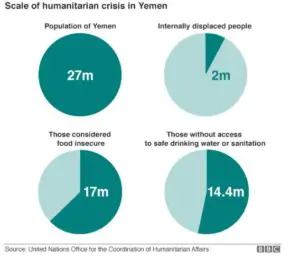
One of the worst humanitarian crises in recent memory has been brought on by the wars in Syria and Yemen, affecting millions of civilians. Along with malnutrition and widespread displacement, the hostilities have also resulted in countless abuses of human rights.
Several groups and nations have chastised the parties involved for breaking International Humanitarian Law as a result of these transgressions, which have not gone ignored (International Humanitarian Law).
A subset of international law known as International Humanitarian Law works to lessen the effects of armed conflict by providing protection for those who no longer take part in hostilities, such as civilians, prisoners of war, and the injured.
By limiting the use of force and safeguarding people who are not directly involved in the conflict, this body of law seeks to lessen the suffering brought on by armed conflict.
In this comparative study, we will look at the International Humanitarian Law violations in Yemen and Syria while comparing and contrasting the two wars.
We will also look at how these violations affect civilians and the difficulties International Humanitarian Law implementation in these conflict zones encounter.
By doing this, we seek to bring attention to the terrible conditions that civilians in these situations are forced to endure and to the significance of respecting International Humanitarian Law’s protections for these groups throughout armed conflict.
HISTORICAL BACKGROUND OF THE SYRIAN CONFLICT
Political oppression, economic disparity, and religious sensitivities have all played a significant role in Syria’s long-standing war. Due to the nation’s diverse ethnic and religious makeup and advantageous geographic position, it has become a battleground for both regional and international powers.
After Syria obtained independence from France in 1946, the Baath Party, which supported Arab nationalism and secularism, dominated the country’s political scene.
A totalitarian government was created in 1970 after a bloodless coup by Hafez al-Assad. Human rights violations, a lack of political freedom, and poor economic management were characteristics of the Assad regime.
As a result of the Arab Spring revolutions in Tunisia, Egypt, and Libya, protests broke out in Syria in 2011. Political reforms, an end to corruption, and more possibilities in the economy were requested by the demonstrators.
Many organisations, including secularists, Islamists, and Kurdish organisations, made up the opposition. The Assad regime was backed by foreign nations including Iran and Russia, while the opposition was backed by the US, Turkey, and Saudi Arabia.
The conflict quickly devolved into a multi-front civil war in which numerous armed factions fought for dominance over Syria’s territory. Many human rights violations have occurred during the battle, including the use of chemical weapons, indiscriminate attacks on populations, and siege warfare.
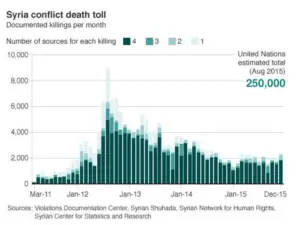
Syria’s population has suffered greatly as a result of the conflict, with millions being displaced and tens of thousands dying. With nearly 11 million Syrians in need of humanitarian aid, the UN has dubbed the situation there the biggest humanitarian disaster in history.
THE PARTIES INVOLVED IN THE SYRIAN CONFLICT
The groups involved in the Syrian conflict are spread out among a wide range of ideologies, interests, and objectives. The Syrian government, different opposition organizations, regional and international forces, and extremist organizations are among the players involved. An in-depth rundown of the parties participating in the Syrian war will be presented in this section.
President Bashar al-Assad has been in charge of the Syrian government since its establishment in 2000. Historically, other minorities, such as Christians and Druze, have supported the government, which is dominated by adherents of the Alawite sect, a branch of Shia Islam. brutality and the use of chemical weapons have been hallmarks of the government’s response to the 2011 protests that sparked the armed uprising.
There are many different groups that are opposed to the Syrian government, each with its own ideologies and objectives. Secularists, Islamists, and Kurdish organizations are all part of the opposition. The opposition’s principal objective is to overthrow the Assad administration and install a democratic government in Syria. The opposition has been charged with violating human rights, particularly by engaging in extrajudicial executions and the use of torture.
Numerous regional nations, notably Iran, Turkey, and Saudi Arabia, have taken part in the Syrian crisis. The Syrian government has received financial and military help from Iran, a major backer of the Assad regime. In addition to being accused of arming and sheltering opposition organisations, Turkey has backed the opposition. In addition to supporting the opposition, Saudi Arabia has been charged with funding terrorist organisations.
Numerous international players, notably the United States, Russia, and France, have taken part in the Syrian crisis. The US initially backed the opposition, but later shifted its attention to combating the Islamic State group (IS) and other extremist groups. Moreover, the United States has given humanitarian help to conflict-affected individuals. Russia has supported the Assad regime militarily and financially and has been a crucial supporter of the Syrian government. France’s engagement in the global coalition against IS brought about its involvement in the fight.
The Islamic State group (IS) and Al-Qaeda affiliates are just two examples of the many extremist groups that have been participating in the Syrian conflict. These organisations have allegedly engaged in significant human rights violations, such as the use of torture and extrajudicial executions, and have taken advantage of the turmoil to expand their presence in Syria.
THE PARTIES INVOLVED IN THE YEMENI CONFLICT
The Houthi rebels, tribal militias, the Yemeni government, as well as a coalition of Arab nations led by Saudi Arabia are all parties to the conflict in Yemen.
The Yemeni government, headed by President Abdrabbuh Mansur Hadi, is acknowledged by the world community as the country’s legitimate administration. A coalition of Arab nations led by Saudi Arabia backs the government. Saudi Arabia has helped the government financially and militarily in its conflict with the Houthis. The government’s major goals in the fight are to keep Yemen under its rule and vanquish the Houthis.
A Zaydi Shia Muslim movement with headquarters in northern Yemen, the Houthi rebels are also known as Ansar Allah. The Houthis have long complained about being treated unfairly and marginalised by the Yemeni government, which has led to their participation in military uprisings against the government. Gaining control of Yemen and establishing a government that speaks for all Yemenis is the Houthis’ major goal in the battle.
The conflict has also drawn in a number of tribal groups, mainly in Yemen’s south. Typically, these militias are either opposed to the Houthi rebels or in coalition with the Yemeni government.
The defence of tribal interests and lands is the primary goal of the militias. Nonetheless, their participation in the conflict has frequently resulted in conflicts with other armed groups, increasing violence and creating an unsettling environment for Yemeni civilians.
The Yemeni government has been supported militarily and financially in its conflict with the Houthis by a coalition of Arab nations led by Saudi Arabia. Egypt, Bahrain, and the United Arab Emirates are among the nations that make up the coalition.
The main goals of the coalition are to safeguard Saudi Arabia’s regional interests and keep Iran, who is suspected of helping the Houthis, from gaining power in Yemen. The coalition’s military operation has drawn criticism for killing a lot of civilians and aggravating the humanitarian crisis in Yemen.
COMPARATIVE ANALYSIS
Despite the differences in the conditions of the conflicts in Syria and Yemen, both have been marked by a number of IHL violations on the side of all parties. There are certain similarities and contrasts between these conflicts’ IHL violations, according to a comparative analysis.
SIMILARITIES:
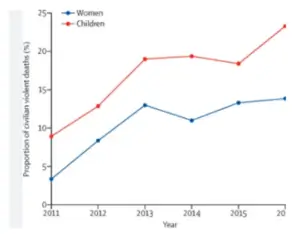
- Targeting civilians- Civilians have frequently been targeted in both conflicts, which has led to many fatalities and injuries. Throughout their military actions, all parties in Yemen and Syria have targeted civilian areas and populations in both countries.
- Attacks on Hospitals and Medical Facilities- Throughout both conflicts, all groups engaged have repeatedly attacked hospitals and medical institutions. Medical staff, patients, and bystanders have died as a result, and others who require medical care are no longer able to obtain it.
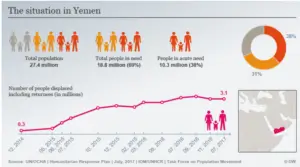
- Forced Displacement- All parties to both conflicts have ejected civilian populations against their will, frequently as a component of their military plans. Millions of people have been displaced as a result, both within Syria and Yemen as well as to nearby nations.
- Usage of Chemical Weapons- The Houthi rebels in Yemen have reportedly used chemical weapons, while the Syrian government has been accused of using them against areas controlled by the opposition in Syria.
- Torture and Arbitrary Detention- The use of torture and arbitrary detention against civilians, including activists, journalists, and humanitarian workers, has been alleged by all sides in both conflicts.
DIFFERENCES:
- Foreign Involvement- Both wars involve numerous parties, but the Syrian crisis has seen a substantial amount of foreign participation, with Russia and Iran supporting the Syrian government and the United States and other Western nations supporting rebel groups. The coalition of Arab governments led by Saudi Arabia has intervened on behalf of the Yemeni government, but the conflict in Yemen has largely been fought by domestic forces.
- Blockade of Aid: Although both conflicts have resulted in serious humanitarian crises, the blockade of aid has been a particularly serious problem in Yemen, where a coalition of Arab nations led by Saudi Arabia has imposed an economic embargo that prevents desperately needed aid from getting to those in need.
- Usage of Cluster Munitions: A coalition of Arab nations led by Saudi Arabia has come under fire for allegedly employing cluster munitions—which are illegal under international law, against civilian areas in Yemen, despite the fact that there have been no allegations of such use in Syria.
- Conflict duration: The conflict in Yemen started in 2014, whilst the conflict in Syria has been going on since 2011. Because of this, the humanitarian crisis in Syria is worse and has led to more fatalities and displaced people.
-
Significant IHL violations have occurred during both conflicts, involving all parties and causing great human suffering. Although if there are some similarities between the crimes, such as the targeting of civilians and attacks on hospitals, there are also important distinctions, such as the foreign engagement in Syria and the assistance blockade in Yemen. In the end, the international community must make sure that all parties to these wars uphold IHL and defend the rights of both combatants and civilians.
CONCLUSION
All parties participating in the wars in Syria and Yemen have committed multiple violations of international humanitarian law. The parallels between the crimes, such as the targeting of civilians and the assaults on hospitals, emphasize the urgent need for heightened attention and action by the international community to protect both civilians and combatants.
The distinctions between the conflicts—such as foreign intervention in Syria and the aid blockade in Yemen—also draw attention to the particular difficulties that each conflict faces. Millions of people have been displaced as a result of the continuous nature of the hostilities, and they urgently require assistance.
The international community must keep pursuing a peaceful end to these conflicts while also holding all parties responsible for any transgressions of international humanitarian law.
Additionally, actions must be taken to guarantee that people in need have access to humanitarian relief and to help the long-term recovery and reconstruction of affected areas.
The wars in Yemen and Syria function as sharp reminders of the need for heightened focus and action to safeguard civilians and defend international humanitarian law. The rights of all impacted communities can only be protected and these conflicts may be resolved by coordinated efforts by the international community.