THE LEGAL STATUS OF SAME-SEX MARRIAGE IN INDIA: A REVIEW OF THE SUPREME COURT’S DECISION TO DECRIMINALIZE HOMOSEXUALITY IN 2018
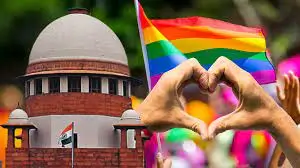
If successful, India will become the 35th nation in the world to do so. The Indian government has urged the top court to deny the petitions because it opposes the legalisation of same-sex unions. The Indian laws governing divorce, alimony, inheritance, and parenthood would all need to be revised if the Supreme Court rules in favour of same-sex marital equality.
THE CULTURAL AND RELIGIOUS ATTITUDES TOWARDS SAME-SEX MARRIAGE IN INDIA: A LOOK AT THE TRADITIONAL VIEWS AND THE CHANGING SOCIAL NORMS
Indian culture and religion have a long history, and conventional ideas towards same-sex marriage are firmly founded in these cultural and religious ideals. Marriage in India is only permitted for male-female couples under several regulations that are specific to the nation’s religious groupings.
The Supreme Court has largely been responsible for the expansion of LGBTQ+ people’s legal rights in India over the past ten years. Sexuality is a fluid idea that cannot be established biologically or genetically, according to the Indian queer movement.
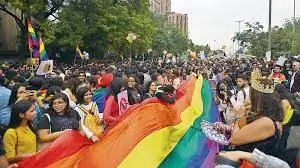
The LGBTQ+ community is now more widely accepted in India as a result of shifting social norms, and support for marriage equality is also rising. The socially conservative government of India opposes the legalisation of same-sex unions and wonders whether the courts even have the authority to make such decisions.
A favourable ruling in a case before the Indian Supreme Court that seeks to legalise same-sex unions could trigger significant social changes.
THE IMPACT OF THE OPPOSITION TO SAME-SEX MARRIAGE ON THE LGBTQ+ COMMUNITY IN INDIA: A REFLECTION ON THE CHALLENGES FACED BY THE COMMUNITY IN THE FIGHT FOR EQUALITY
The LGBTQ+ community in India has been significantly impacted by the country’s hostility to same-sex marriage. The LGBTQ+ community has found it difficult to advocate for equality because the Indian government is socially conservative and opposed to same-sex marriage.
In addition, it has been challenging for the community to obtain acceptance due to the traditional attitudes toward same-sex marriage that are firmly founded on cultural and religious beliefs. The Supreme Court has largely been responsible for the expansion of LGBTQ+ people’s legal rights in India over the past ten years.
Sexuality is a fluid idea that cannot be established biologically or genetically, according to the Indian queer movement. A favourable ruling by the Supreme Court could trigger significant social changes despite the lengthy and difficult battle for marital equality in India. If same-sex marriage is allowed, it will significantly impact other Indian legislation and represent the most significant reform in a decade.
THE ROLE OF PARLIAMENTARY DEBATES IN SHAPING PUBLIC OPINION ON SAME-SEX MARRIAGE IN INDIA: AN ANALYSIS OF THE HISTORICAL CONTEXT AND THE CURRENT POLITICAL CLIMATE
Public opinion on same-sex marriage in India has been significantly influenced by parliamentary debates. The socially conservative Indian government opposes same-sex marriage’s legalisation and disputes the court’s authority to make such a determination.
The Supreme Court has largely been responsible for the expansion of LGBTQ+ people’s legal rights in India over the past ten years. A number of petitions requesting the legalisation of same-sex unions have been heard by the Supreme Court of India, and the proceedings have been “live-streamed in the public interest.”
The proceedings have drawn a lot of attention, and a positive ruling might unleash profound social change. The traditional opinions on same-sex marriage, which are firmly founded in cultural and religious values, have had an impact on the parliamentary discussions.
But as India’s social mores change, there is a growing demand for marriage equality there as well as a growing acceptance of the LGBTQ+ population. A positive ruling by the Supreme Court could result in a change in the political atmosphere in India, where debates in parliament have significantly shaped popular opinion on same-sex marriage.
THE WAY FORWARD FOR SAME-SEX MARRIAGE IN INDIA: A DISCUSSION ON THE LEGAL AND SOCIAL REFORMS NEEDED TO ACHIEVE MARRIAGE EQUALITY IN THE COUNTRY
A favourable ruling by the Supreme Court could trigger significant social changes despite the lengthy and difficult battle for marital equality in India. If same-sex marriage is allowed, it will significantly impact other Indian legislation and represent the most significant reform in a decade.
The social and legal changes required for India to attain marital equality are substantial. The socially conservative Indian government opposes same-sex marriage’s legalisation and disputes the court’s authority to make such a determination.
In addition, it has been challenging for the community to obtain acceptance due to the traditional attitudes toward same-sex marriage that are firmly founded on cultural and religious beliefs. But as India’s social mores change, there is a growing demand for marriage equality there as well as a growing acceptance of the LGBTQ+ population.
In order to achieve marriage equality in India, a multifaceted strategy that incorporates societal change, legal change, and public opinion-altering education initiatives is needed. A positive ruling by the Supreme Court might be a huge advancement in the campaign for equality for the LGBTQ+ population in India, which has been fighting for their rights for many years.