I. Introduction
Definition of Refugees
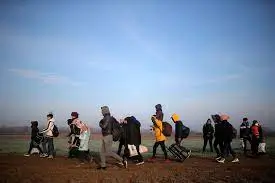
People who have fled their home country because of a legitimate fear of being persecuted because of their race, religion, nationality, political stance, or membership in a specific social group are considered refugees.
Due to the fear of harm, individuals cannot or will not return to their native country, therefore they look for safety elsewhere. The organization in charge of providing safety and aid to refugees across the world is the United Nations High Commissioner for Refugees (UNHCR).
Importance of Studying the Lives of Refugees
Studying the lives of refugees is important for several reasons:
- Humanitarian reasons: Studying the lives of refugees, one of the most disadvantaged groups in the world, can help us better understand the difficulties they confront and the best ways to support them.
- Political reasons: A worldwide issue with political ramifications is the refugee crisis. Understanding the factors that lead to displacement and the experiences of refugees can help shape policy choices and crisis responses.
- Social reasons: In their host societies, refugees frequently experience social marginalization and prejudice. Understanding the social dynamics of relocation and how to advance social inclusion and cohesiveness may be learned through researching their experiences.
- Economic reasons: Economic effects of displacement affect both refugees and the host populations. Policies and initiatives that support economic development and integration can benefit from research on the economic effects of displacement.
In conclusion, researching the lives of refugees helps us comprehend the humanitarian, political, social, and economic ramifications of displacement and helps us create effective solutions to the world’s refugee issue.
Overview of the Report
In order to offer a thorough knowledge of the lives of refugees, the difficulties they encounter, and the effects of relocation, the report “No Home to Go Back to: A Look into the Lives of Refugees Around the World” was written.
In addition to providing case studies of refugees from various parts of the world, the study will examine the factors that lead to displacement, living in refugee camps, integration and resettlement, mental health, and trauma. The report’s goal is to urge action to help and defend the rights of refugees globally by evaluating the problems encountered by refugees.
II. Causes of Displacement
Political Conflicts and Wars
One of the main reasons why migrants throughout the world are displaced is due to political unrest and war. Civilians are frequently caught in the crossfire when armed conflicts or wars break out, forcing them to flee persecution and brutality.
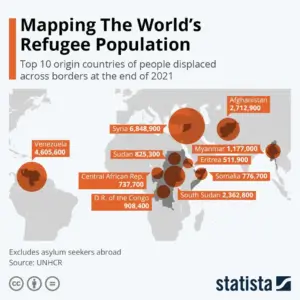
One of the worst refugee crises in recent history, for instance, was brought on by the ongoing violence in Syria, which has forced millions of Syrians to migrate to other nations, both nearby and far away. Similar to this, the fighting in South Sudan has caused millions of people to flee their homes, both within the country and to nearby nations like Kenya and Uganda.
Political upheaval and armed conflict can also result in the persecution of particular racial or religious groups, which exacerbates displacement. For instance, the Rohingya issue in Myanmar has resulted in the eviction of hundreds of thousands of Muslims who have been the targets of government brutality and persecution.
Political and military conflicts frequently result in long-term displacement, preventing refugees from returning until the crisis is over. This can result in prolonged refugee situations, when people fleeing their homes are compelled to stay for years or even decades in metropolitan areas or camps with little access to basic essentials like food, water, and healthcare.
Natural Disasters
Another significant factor in the global displacement of migrants is natural catastrophes. Natural catastrophes including hurricanes, earthquakes, floods, and droughts can result in significant property damage and forced emigration, especially in low-income nations with insufficient means to respond to such calamities.
For instance, more than 1.5 million people were displaced by the 2010 earthquake in Haiti, and many of them were compelled to live in improvised camps for years. Similar to this, millions of people in Southeast Asia were displaced by the Indian Ocean tsunami in 2004.
In addition to increasing already existing vulnerabilities like poverty and social inequality, natural catastrophes can also result in greater displacement. For instance, repeated flooding in Bangladesh has forced millions of people from their homes, many of whom are already in poverty and are therefore more susceptible to the consequences of natural catastrophes.
Natural disasters can cause long-term displacement as well, preventing refugees from going back until the region is repaired and certified safe to live in. This can result in protracted refugee situations where refugees live in camps or urban areas for years or even decades, similar to those brought on by political crises and wars.
Persecution based on Ethnicity, Religion, or Political Beliefs
Another significant factor that leads to refugees fleeing their homes is persecution based on race, religion, or political opinions. People who have certain political opinions, or who are members of particular ethnic or religious groups, are frequently the targets of prejudice, violence, or even genocide.
For instance, the Rohingya issue in Myanmar has resulted in the eviction of hundreds of thousands of Muslims who have been the targets of government brutality and persecution. Similar to this, the civil conflict in Sri Lanka resulted in the eviction of thousands of Tamils, who faced hostility and prejudice from the government.
People who are not directly targeted but who are caught in the crossfire of political, religious, or racial persecution may also end up being displaced. For instance, the crisis in Syria has forced millions of people to flee their homes because they are being persecuted and violently repressed by armed groups despite not being actively participating in the fight.
Long-term displacement can arise from forced emigration, with refugees unable to return until the situation in their country of origin is rectified. This can result in protracted refugee situations, when refugees are forced to endure years or even decades of living in camps or metropolitan areas without access to basic essentials like food, water, and healthcare.
III. Life in refugee camps
Challenges Faced by Refugees in Camps
Refugees who live in camps face a range of challenges, including:
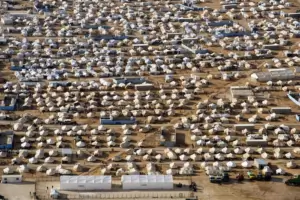
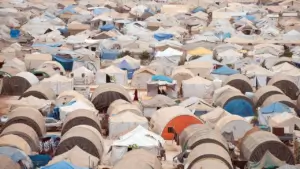
- Overcrowding: Refugee camps frequently have too many people and not enough room or resources to house the overwhelming number of refugees. Poor living circumstances, such as insufficient shelter, sanitation, and hygiene, may result from this.
- Lack of basic necessities: Refugees living in camps could not have access to needs like food, water, and medical treatment. In other circumstances, refugees can also not have access to jobs and educational prospects.
- Security: Refugee camps may be unstable, with high levels of crime, exploitation, and violence. Particularly susceptible to violence and sexual exploitation are women and children.
- Mental health: Refugees may face trauma, sadness, and anxiety as a result of their experiences, which can have a serious impact on their mental health. However, in refugee camps, mental health services are sometimes scant or nonexistent.
- Dependence on aid: Refugees living in camps run the risk of becoming reliant on assistance and losing their independence. They could feel hopeless and powerless as a result, which would make it harder for them to start over.
For refugees, these difficulties may have long-term effects that limit their options for job, education, and community inclusion. Promoting the rights and well-being of refugees depends on addressing these issues. (Challenges faced by refugees in camps, 2018)
Access to Basic Necessities such as Food, Water, and Healthcare
For refugees living in camps, obtaining access to basic essentials like food, water, and healthcare is extremely difficult. Many refugees are compelled to escape their homes with few belongings or none, and they may enter camps with limited access to these essentials. (Access to education, healthcare, and employment, 2019)
Food
Food is frequently given by humanitarian groups like the World Food Program (WFP) in refugee camps. Refugees may not have access to a balanced diet and the food may not be of sufficient quality or quantity. In refugee camps, food shortages and malnutrition are frequent issues.
Water
For the health and wellbeing of refugees, access to clean water is crucial, yet it is sometimes scarce in camps. Refugees could have to travel a considerable distance to get water, and that water might not be suitable for drinking or for personal hygiene. Disease can also spread as a result of inadequate water and sanitation systems.
Healthcare
For the treatment of diseases and injuries, access to healthcare is crucial, but it is frequently constrained in refugee camps. It’s possible that healthcare institutions lack the people and resources they need, and refugees could not have access to necessary medications or treatments. Despite the high frequency of mental health issues among migrants, mental health care is frequently lacking in refugee camps.
A multifaceted strategy is needed to address these issues, including investments in infrastructure, supplies, and labor for essential services like food, water, and healthcare. It also necessitates advocating for the rights and welfare of refugees and tackling the underlying causes of displacement.
Education and Job Opportunities
For refugees to reconstruct their lives and become self-sufficient, they need to have access to education and employment possibilities. Refugees living in camps, however, frequently face major obstacles to getting an education and finding employment.
Education
Refugees may encounter considerable obstacles to obtaining an education in camps, such as a lack of funding, a dearth of educational materials, and a lack of adequate educational facilities. Children might not be able to attend school because of overcrowding or they could not have access to suitable instructors or educational resources. As a result, a large number of refugee children skip school or only obtain a little education.
Job Opportunities
Refugees living in camps can also have substantial obstacles to finding employment. They could not have the abilities and credentials necessary for open positions, or they might experience prejudice in the workforce. Additionally, refugees might not be able to find employment because of legal limitations or a lack of access to work permits.
Investments in refugee education and training programs, as well as legislative measures that support refugee involvement in the labor market, are necessary to address these problems. It also necessitates advocating for refugees’ rights and well-being and tackling the legal and policy obstacles that hinder them from accessing chances for employment and education.
IV. Integration and resettlement
Challenges Faced by Refugees after Leaving Camps
Refugees face significant challenges after leaving camps and attempting to rebuild their lives.
Some of the challenges they may face include:
- Housing: When refugees leave the camps, it may be difficult for them to locate acceptable homes, especially if they are socially isolated or have few means. Overcrowding, homelessness, and instability may result from this.
- Integration: When striving to assimilate into their host communities, refugees may encounter social and cultural obstacles. Their access to chances for employment, education, and healthcare may be hampered by discrimination, prejudice, and language problems.
- Legal status: Legal obstacles may stand in the way of refugees’ attempts to use basic services or integrate into society. They might not have legal status, or their ability to move around, work, or engage in politics may be limited.
- Mental health: Refugees may face trauma, sadness, and anxiety as a result of their experiences, which can have a serious impact on their mental health. After leaving the camps, however, mental health support is frequently scarce or nonexistent.
- Economic challenges: After leaving the camps, refugees may find it difficult to obtain work or make money, especially if they lack education or the necessary job skills. As a result, there may be little opportunity for growth and development as well as poverty and social marginalization.
A multifaceted strategy is needed to address these issues, including investments in cheap housing, social inclusion and integration measures, and assistance for the mental health and wellbeing of refugees. Additionally, it necessitates resolving the legal and policy obstacles that keep refugees from utilizing basic services and contributing to society as well as promoting their rights and general welfare. (Challenges faced by refugees after leaving camps, 2019)
Cultural Differences and Language Barriers
When trying to assimilate into their host communities, refugees encounter tough obstacles including linguistic and cultural limitations. These obstacles may make it more difficult for them to access opportunities for employment, education, and healthcare, which may result in social isolation and discrimination.
Cultural Differences
Refugees may have different customs, beliefs, and values than their host communities due to their varied ethnic backgrounds. This can cause misunderstandings and confrontations, especially if the host community sees migrants as a danger to its cultural identity.
Language Barriers
In addition to limiting refugees’ access to employment, healthcare, and education options, language challenges can also cause social marginalization. Refugees may find it difficult to communicate with their host society and may not have access to resources for translation and interpreting.
Investments in refugee education and language programs are necessary to meet these obstacles, as are measures that support diversity and social inclusion. Additionally, it necessitates confronting cultural preconceptions and stereotypes that may hinder refugees’ integration into their host communities. The integration of refugees into their host communities may be advantageous for both the refugees and the host communities, fostering variety and social cohesiveness.
Access to Education, Healthcare, and Employment
For refugees to reconstruct their lives and become self-sufficient, they must have access to job, healthcare, and educational opportunities. However, receiving these fundamental services may be extremely difficult for refugees.
Education
Refugees may have considerable obstacles to getting an education, especially if they are poor or illiterate. They could also be denied access to quality instructors and educational resources, or they might experience prejudice inside the educational system. Investments in educational and linguistic programs for refugees are necessary to address these issues, as are laws that support equitable access to education.
Healthcare
Refugees may also encounter considerable obstacles when trying to get medical care, especially if they are in financial or legal trouble. They could also not have access to necessary medications or treatments, or they can experience prejudice in the healthcare system. Investments in healthcare infrastructure, resources, and regulations that support fair access to healthcare are necessary to address these issues.
Employment:
Refugees may have trouble finding work or earning money, especially if they lack education or the necessary skills. Additionally, they could encounter prejudice in the labor market or struggle to get work authorizations or legal status. Policies that support the integration of refugees into the labor force are necessary to address these issues, as are financial expenditures in entrepreneurship and vocational training programs.
A multifaceted strategy is needed to address these issues, including spending on essential services, inclusionary policies, and support for the rights and welfare of refugees. It also calls for removing the legal and policy obstacles that keep refugees from using basic services and contributing to society, as well as promoting their rights and general welfare.
V. Mental health and trauma
Impact of Displacement on Mental Health
Refugees’ mental health may be significantly impacted by displacement. Due to their exposure to violence, persecution, and displacement, refugees are more likely to develop trauma, despair, anxiety, and other mental health issues.
Trauma
Refugees may have been involved in or seen horrific incidents like violence, torture, or the death of a loved one, which can result in PTSD symptoms including nightmares, flashbacks, and avoidance behavior.
Depression and Anxiety
As a result of their experiences of displacement, refugees may also suffer from despair and anxiety. The difficulties of starting afresh in a different setting might make them feel alone, helpless, and overburdened.
Social Isolation and Discrimination
Additionally, social exclusion and prejudice are common among refugees, which can worsen mental health issues and restrict access to services and help.
Children
When it comes to the effects of displacement on mental health, children are especially at risk. Their experiences of dislocation may cause them to have behavioral issues, developmental delays, and academic challenges.
Investments in mental health services, assistance for refugees, and policies that encourage acceptance and understanding of mental health disorders are all necessary to meet the requirements of refugees in terms of mental health. It also necessitates advocating for the rights and welfare of refugees and tackling the underlying causes of displacement. Support for mental health is crucial for fostering refugees’ resilience and well-being as well as for facilitating their effective integration into their host communities.
Trauma Experienced by Refugees
The experiences of violence, persecution, and displacement that refugees have might result in a variety of traumas.
There are several traumas that migrants may go through, including:
- Direct violence: Refugees may have been subjected to or witnessed physical abuse, torture, or sexual assault.
- Forced displacement: Forcing people to leave their homes and communities because of hostility, persecution, or war can be distressing for the refugees.
- Loss of loved ones: Refugees may have lost loved ones as a result of conflict, persecution, or violence. This may involve the passing of loved ones, friends, and neighbors.
- Trauma during the journey: For refugees, the travel to a secure location can be painful as well. Extreme weather, a shortage of food and water, physical and psychological abuse, and exploitation by smugglers are just a few of the challenging and hazardous situations they could encounter.
- Uncertainty and insecurity: Refugees frequently experience unpredictability and instability in their new surroundings. They might not have access to needs like food, water, and shelter, and they might experience prejudice and marginalization in their new communities.
Investments in mental health services, refugee assistance, and policies that encourage acceptance and understanding of mental health disorders are all necessary to address the trauma that refugees endure. It also necessitates advocating for the rights and welfare of refugees and tackling the underlying causes of displacement. Promoting the resilience and well-being of refugees is crucial for ensuring their effective integration into their host communities. Trauma-informed care and assistance are also crucial. (Mental health and trauma, 2018)
Importance of Mental Health Support for Refugees
Support for mental health is crucial for refugees’ resilience and general well-being. Due to their exposure to violence, persecution, and displacement, refugees are more likely to develop trauma, despair, anxiety, and other mental health issues.
Mental Health Support can help Refugees to:
- Address trauma: Refugees who receive mental health treatment may find it easier to understand and deal with the trauma they have gone through as well as build coping mechanisms to lessen the effects of their experiences.
- Access basic services: Receiving mental health care may make it simpler for refugees to comprehend and process the trauma they have experienced as well as develop coping skills to decrease the impact of their experiences.
- Build resilience: By encouraging social support, coping strategies, and wholesome mental health practices, mental health assistance can aid refugees in developing resilience and adjusting to their new settings.
- Promote social inclusion: By encouraging social ties, community involvement, and cultural awareness, mental health care can aid refugees in overcoming social isolation and discrimination.
- Improve overall well-being: Support for mental health can help refugees feel better overall by fostering good mental health and minimizing the negative effects of trauma and dislocation.
Investments in mental health services, assistance for refugees, and policies that encourage acceptance and understanding of mental health disorders are all necessary to meet the requirements of refugees in terms of mental health. It also necessitates advocating for the rights and welfare of refugees and tackling the underlying causes of displacement. Support for mental health is crucial for fostering refugees’ resilience and well-being as well as for facilitating their effective integration into their host communities. (World Health Organization, 2013)
VI. Conclusion
Recap of Key Findings
The main conclusions in relation to the difficulties experienced by refugees are summarized as follows:
- Refugees have difficulties in refugee camps such congestion, a shortage of basic essentials like food, water, and healthcare, security issues, mental health problems, and a reliance on help.
- After leaving the camps, refugees confront difficulties with housing, assimilating into their new communities, their legal situation, problems with their mental health, and economic hardships.
- For refugees to reconstruct their lives and become self-sufficient, they need access to job, healthcare, and education, but they frequently confront enormous obstacles in getting these necessities.
- Refugees’ mental health can suffer significantly from displacement, and they are more likely to experience trauma, sadness, anxiety, and other mental illnesses.
- A multifaceted strategy is needed to address these issues, one that includes spending on essential services, promoting inclusiveness and equitable access, and helping refugees with their mental health and wellbeing. Additionally, it necessitates resolving the legal and policy obstacles that keep refugees from utilizing basic services and contributing to society as well as promoting their rights and general welfare.
Call to Action for Supporting Refugees and Promoting their Rights
Supporting refugees and promoting their rights is essential for creating a more just and compassionate world.
Here are some crucial measures that people, groups, and governments can do to assist refugees:
- Advocate for refugees: Speak out against prejudice and injustice toward refugees and support legislation and initiatives that uphold their rights and general welfare.
- Donate to refugee organizations: Contribute to groups that help refugees or fight for their rights by donating money, time, or resources.
- Volunteer: Volunteer with refugee-supporting groups that offer things like literacy classes or mental health assistance.
- Support resettlement efforts: Help refugees integrate and succeed in their new settings by supporting initiatives to resettle them in your town.
- Promote cultural understanding: Work to combat preconceptions and biases in your community while promoting cultural sensitivity and knowledge of refugee challenges.
- Engage in policy advocacy: Speak out for laws that protect the rights and wellbeing of refugees, such as laws that guarantee their access to work, healthcare, and educational opportunities, and that uphold their dignity and rights.
- Support refugee-led initiatives: Encourage projects that promote the rights and wellbeing of refugees and are led by refugees themselves.
By doing these things, we can help refugees, advance their rights, and contribute to a more compassionate and just society. (Call to action for supporting refugees and promoting their rights, (2018)) (How to help Refugees, n.d.)
Future Directions for Research and Policy Development
There are various potential future possibilities for refugee-related research and policy development, including:
- Long-term impacts of displacement: More study is required to determine how long-term relocation affects refugees’ mental health, social integration, and economic results.
- Integration and social inclusion: There is a need for additional study on the best ways to encourage refugees’ social participation and integration into their host communities, as well as for legislation that help these initiatives.
- Education and training: More study is required on efficient refugee education and training programs, especially in the areas of language learning and career preparation.
- Legal and policy barriers: More study is required to better understand the legal and legislative obstacles that prohibit refugees from utilizing basic services and contributing to society, as well as the need for policies that address these obstacles.
- Refugee-led initiatives: In addition to laws that support and encourage these projects, further study is required to determine the efficacy of initiatives led by refugees in advancing their rights and general well-being.
- Climate change and displacement: There is a need for additional study on the relationship between climate change and displacement as well as for policies that address this new problem given the likelihood that millions more people might be displaced due to climate change in the future years.
We can better understand the difficulties faced by refugees and create more effective plans for supporting their rights and well-being by investing in research and policy development in these areas. (International Organization for Migration., 2019) (Research Agenda on Refugee resetlement, 2018) (Global Trends: Forced Displacement , 2018)
Works Cited
- Challenges faced by refugees in camps. (2018). Retrieved from UNHCR. Refugee camp conditions.: hitps://www.unhcr.org/refugee-camp-conditions
- Access to education, healthcare, and employment. (2019). Retrieved from UNHCR. Access to education for Refugees: https://www.unhcr.org/education.html
- Challenges faced by refugees after leaving camps. (2019). Retrieved from UNHCR. What happens after refugees leave camps?: https://www.unhcr.org/news/latest/2019/5/5cd0f4f14/happens-refugees-leave-camps.html
- Mental health and trauma. (2018). Retrieved from UNHCR. Mental health and psychosocial support.: https://www.unhcr.org/mental-health-and-psychosocial-support.html
- World Health Organization. (2013). Retrieved from WHO. Promoting mental health of refugees and migrants.: https://www.who.int/mental_health/mhgap/evidence/promoting
- Call to action for supporting refugees and promoting their rights. ((2018)). Retrieved from UNHCR. What can you do to help refugees? : https://www.unhcr.org/what-can-you-do.html
- How to help Refugees. (n.d.). Retrieved from Refugee Council: https://www.refugeecouncil.org.uk/how-to-help/
- International Organization for Migration. (2019). Retrieved from International Organization for Migration. The future of migration: Building capacity for change.: https://publications.iom_int/system/files/pdf/future_of_migration.pdf
- Research Agenda on Refugee resetlement. (2018). Retrieved from Refugee Studies Centre: https://www.rsc.ox.ac.uk/research/research-agenda-on-refugee-resettlement
- Global Trends: Forced Displacement . (2018). Retrieved from UNCHR.: https://www.rsc.ox.ac.uk/research/research-agenda-on-refugee-resettlement