Skip to content

Heading

Truth has become a Victim in the age of false news

Table of Contents

ABSTRACT

Ayurveda is among the oldest systems of medicine in the world and has established its presence as part of the modern health care (HC) system, especially within the context of HC governance. Over the past few decades, there has been a significant increase in the formalisation (i.e., institutionalisation) of Ayurvedic practice in India through regulation, educational reform, and incorporation into public health programs, which has raised several important issues relating to patient safety, professional accountability, and quality of HC. While public trust in Ayurveda is high, as is political support for it, there are continuing concerns about issues such as: informed consent; false or misleading evidence for therapeutic benefit; standardisation of treatment protocols; and liability for malpractice. This article reviews the existing legal and regulatory framework applicable to Ayurveda in India, with a focus on comparing it to a sample of other approaches to regulating traditional or complementary medicine internationally. This research uses a doctrinal and comparative policy analysis to assess the effectiveness of current laws, professional regulatory systems, and ethical guidelines for protecting patients. The article also examines how the National Commission for the Indian System of Medicine, consumer protection laws, and the development of health care law have influenced accountability in the practice of Ayurvedic medicine. The study concludes that Ayurveda’s future legitimacy will depend on its continued reliance on its traditional foundation and its ability to meet the current expectations for transparency and evidence-based practice, informed consent, and patient-centred care. The article ends with a proposal for reforms to strengthen the regulatory framework while maintaining the cultural and therapeutic values associated with traditional healthcare systems.

KEYWORDS:

Ayurveda, Healthcare Regulation, Patient Protection, Medical Ethics, Legal Governance,
Traditional Medicine, AYUSH, Professional Liability

INTRODUCTION

The use of traditional forms of medicine is an important aspect of health care systems around the
world and the World Health Organisation (WHO) recognises that traditional and complementary
forms of medicine are key components of health care systems in many countries, especially
developing areas in which availability and cultural acceptability have a considerable bearing on
health care choices. Ayurveda, one of the many forms of traditional healthcare, is considered to be
one of the most comprehensive and longstanding forms of medical treatment.

India has made extensive efforts to develop and regulate Ayurvedic practice through legal and
regulatory organisations, quality of education requirements, licensing criteria and integration with
the public health care system. Although there continues to be widespread interest and use of
Ayurvedic medicine, the rapid growth of the Ayurvedic market and services has shown deficiencies
in the regulatory oversight of medical and therapeutic products, ethical compliance and safety and
protection of patients. There are increasing and significant demands for legal scrutiny regarding
issues related to the professional negligence of practitioners, informed consent policies, advertising
standards and testing for scientific validation of practitioners of Ayurvedic medicine.1

This article examines whether the existing legal framework adequately protects patients while
facilitating the growth of Ayurveda as a recognised healthcare system.

RESEARCH OBJECTIVES

To examine the legal framework governing Ayurveda in India.
To evaluate ethical accountability mechanisms applicable to Ayurvedic practitioners.
To compare Indian regulatory approaches with selected international models.
To assess challenges relating to patient protection and professional liability.
To propose policy reforms for strengthening regulatory governance.

LITERATURE REVIEW

The most recent literature has shown that there is a move from a system of regulating Ayurveda
strictly through education and professional registration. This new governance system consists of
four elements: patient safety, ethical accountability, quality assurance, and evidence-based
healthcare delivery. Most of the previous regulatory systems focused on the credentialing of
practitioners and standardising educational curricula; however, the current healthcare governance
model requires the use of legal mechanisms to ensure transparency, clinical competence,
accountability, and protection of patients’ rights. In addition, this movement reflects the increasing
integration of Ayurveda into national health systems and the increasing expectation that all forms
of traditional health care will conform with internationally recognised principles of professional
regulation and clinical governance.2

The WHO Benchmarks for the Practice of Ayurveda (2022) mark an important point in the
development of Ayurveda. They establish internationally acknowledged minimal competency
requirements for Ayurvedic practitioners, healthcare facilities and infrastructure; Medicaid records
or similar clinical documentation; informed consent from patients; patient confidentiality; a written
referral process; and regulatory oversight of this practice. The Benchmarks provide guidelines for
the integration of traditional medical practices with modern legal and ethical standards, while also
protecting and preserving Ayurvedic principles. The NCISM Act of 2020 has also strengthened
regulatory governance of all systems of medicine in India, including Ayurveda, through the
promotion of competency-based education, institutional accreditation, standardised professional
practices, and more accountable delivery of Ayurvedic healthcare.

The most current evidence supports the need for accountability through professional ethics in the
regulation of Ayurveda. The latest research demonstrates that professional ethics should include
both traditional values as well as aspects of contemporary professional ethics such as: informed
consent, patient autonomy, confidentiality, appropriate documentation, responsible prescribing,
and compliance with defined standards of care. Additionally, pharmacovigilance, quality control
of Ayurvedic products, adverse event reporting, and evidence-based clinical practice guidelines
are now viewed as important tools to enhance patient safety and build confidence in Ayurveda. As
stated in recent policy analyses, key components to improving the governance of Ayurveda include: implementing mandatory accreditation, using electronic patient records, having
standardised clinical practice guidelines, developing a mechanism for ongoing professional
education, having strong systems for monitoring the safety of medications, being non-partisan
when handling disciplinary procedures, and having credible legal systems to provide oversight.3

RESEARCH METHODOLOGY

This study adopts a doctrinal and comparative legal research methodology. Primary sources
include statutory enactments, governmental regulations, judicial decisions, and policy documents.
Secondary sources include scholarly articles, books, reports of international organisations, and
academic commentaries. Comparative analysis is undertaken with regulatory frameworks
governing traditional and complementary medicine in selected jurisdictions including China, the
United Kingdom, and Australia.

LEGAL GOVERNANCE OF AYURVEDA IN INDIA 4 5 6

Evolution of Regulations in Ayurveda Through History

The regulation of Ayurveda as a formal body has undergone many changes from when Ayurveda
was first recognised by colonists/colonial governments as an indigenous form of medicine to a
contemporary statutory regulatory framework. The government has developed several
initiatives since 1947 encouraging the development of a code of ethics to protect traditional
knowledge-based systems while still providing for the regulation, standardisation, and
professionalisation of Ayurvedic and other traditional healing systems.

National Commission For Indian Medicine Act (NCISM) 2020

There has been substantial reform to Ayurvedic governance with the National Commission for
Indian Medicine Act 2020. The statute streamlined previously existing regulations; this
act created standards for education, licensure as a practitioner, and oversight of the delivery of
Ayurvedic services.
The NCISM Act aims to increase transparency, accountability, and quality assurance regarding
services delivered under the Indian system of medicine; however, challenges remain related to the
implementation and enforcement of this legislation.

The Ministry of AYUSH As The Primary Governmental Authority

The Ministry of AYUSH serves as the primary government entity charged with the formation of
policies and regulations, promoting research, and coordinating with institutions that work with
Ayurveda and other forms of traditional medicine.

ETHICAL ACCOUNTABILITY IN AYURVEDA 7

Ethics and Responsibilities of Practitioners

Practitioners must maintain the following top priorities: the welfare of the patient, confidentiality,
competence and professional integrity. As the practice of Ayurveda continues to evolve, so too do
all the ethical standards that have been established for modern healthcare observers.

Informed Consent and Autonomy of Patients

Obtaining informed consent is becoming an essential principle within the field of health care law.
Patients are to be informed about their condition, available options, the benefits, disadvantages,
and risks of the identified options.
Patients do not fully understand the requirements of informed consent and conditions associated
with using Ayurvedic remedies. Since most patients view Ayurvedic remedies as “natural” and
thus, “safe”, a lack of disclosure about possible adverse consequences or side effects of
Ayurvedic methods is more common than with conventional methods

Fraudulent Advertising & Misleading Therapies

As the market for Ayurvedic therapy grows, so does the concern over the existence of exaggerated
therapeutic claims made by practitioners. Ethical regulatory oversight and guidance require the
use of legitimate data to support marketing initiatives and to genuinely promote Ayurvedic
therapies without misleading prospective customers.

PATIENT PROTECTION AND LEGAL LIABILITY 8

CONSUMER PROTECTION – LAWS THAT PROTECT CONSUMERS OF
HEALTHCARE

The Consumer Protection Act 2019 provides a mechanism for addressing the grievances of
consumers concerning healthcare services; therefore, Ayurveda practitioners can be liable for
claims made by patients as a result of failures or deficiencies in the health services provided.

PROFESSIONAL NEGLIGENCE BY AYURVEDA PRACTITIONERS

The issue of determining whether professional negligence has occurred in traditional medicine is
complicated legally. In making this determination, courts must apply both traditional healing
practices and contemporary standards of reasonable professional conduct of the practitioner.

Professional liability may arise from:

  • Failure to diagnose correctly;
  • Providing the wrong treatment;
  • Failure to obtain consent from patients prior to treatment;
  • Failing to maintain legible and accurate records; and
  • Making representations to patients regarding their chances of success or perceived benefit from
  • a treatment.


CURRENT TRENDS IN JUDICIAL DECISIONS

Comparative perspectives 9 10

China

China has created an integrated regulatory system in that it combines traditional Chinese medicine
with mainstream health care. The various types of regulatory oversight include practitioner
licensing, research standards and methods of quality control.

United Kingdom

The United Kingdom takes a relatively cautious stance on the regulation of traditional and
complementary therapies. Its regulatory structure is built on the premise of providing consumer
protection, professional registration, and truthful advertising.

Australia

Australia provides national regulation for complementary medicine through health care and
consumer protection laws. There is a strong emphasis placed on supporting evidence for making
claims about treatments and consumer safety.

The comparative analysis shows that the effective regulation of traditional and complementary
therapies requires:

  • Specific licensing standards;
  • Strong protections for patients’ rights;
  • Transparent regulatory mechanisms for disciplining practitioners;
  • Scientific evidence supporting the therapeutic claims made by practitioners; and
  • Strong mechanisms for consumers to pursue their complaints against practitioners.

ISSUES THAT POLICY MAKERS WILL ENCOUNTER IN THE 21ST
CENTURY

Almost all regulations regarding the use of Ayurvedic medicine will need to be improved upon in
order to address the following issues:

  • The absence of standard operating procedure (SOP) for performing treatments
  • The low rate of integration of informed consent throughout the continuum of care
  • A lack of public knowledge regarding their rights as patients
  • A significant lack of monitoring of advertisements and commercial claims for Ayurvedic products
  • Variability in the quality and competency level of the education received by Ayurvedic
  • practitioners.

By addressing these issues, we will build public trust in Ayurvedic medicine, as well as improve
health outcomes.

POLICY RECOMMENDATION

  1. Creation of an Adult Informed Consent Policy Method Specific to Ayurveda
  2. Use of Independent Grievance Resolution Processes for Patients Receiving Allopathic Medicine
  3. Strengthening Regulation and Oversight over all Advertising of Health Care Products and on the Internet and Providing Alternatives for Electronic Marketing
  4. Promotion of Evidence-Based Clinical Research into All Types of Health Care While Respecting Traditional Knowledge Systems
  5. Increase the Availability of Ethics Training in Ayurveda Education and Workforce
  6. Creation of National Standards for the Maintenance of Patient Records and Clinical Documentation
  7. Greater Coordination between AYUSH Regulators and Agencies Responsible for Consumer Protection.

CONCLUSION

The importance of Ayurveda in India’s health care system and cultural identity will remain as long
as there are strong legal and ethical protections. For traditional medical systems to continue
to be recognised as both legitimate and sustainable in the 21st century, and to serve as responsible
health care providers, they must operate within a framework that values patient autonomy,
accountability, transparency, and safety.


India has made gains in its ability to regulate Ayurveda through formalised legislative changes and
the establishment of institutional regulations. However, serious issues remain regarding issues
such as professional liability, informed consent, advertisements, and safeguarding patients.
Overall, these issues could benefit from more relevant legislation and policy. The experience of
other places shows that successfully regulating traditional medicine is not necessarily
detrimental to the body of evidence that supports it. Instead, good governance of traditional healing methods and their practitioners could contribute to enhancing public trust and improving
Ayurveda’s role in today’s health care system.


Career Option After LLB in India
27Jun

Career Option After LLB in India

Career Option After LLB in India: Jobs, Salary & Government Exams (2026 Guide) Blog Author (s) Adv. Jha Pranav Kumar…

Self-Executing Dispute Resolution via Smart Contracts
24Jun

Self-Executing Dispute Resolution via Smart Contracts

Self-Executing Dispute Resolution via Smart Contracts: Emerging Legal Hurdles and Prospects in Decentralized Financial Ecosystems VOLUME 3 ISSUE 2 Author…

Legal Notice Format India 2026
16Jun

Legal Notice Format India 2026

Legal Notice Format India 2026: Free Templates for Consumer, Cheque Bounce & Property Disputes Blog Author (s) LRA Table of…

Related Articles – Volume 3, Issue 2

Questions of medical negligence have acquired increasing importance in India as healthcare has moved into a more rights-conscious and legally supervised environment.… Continue reading

Waste generation has emerged as one of the most serious environmental challenges facing India today. Population growth, rapid urbanization, and increasing consumption patterns have… Continue reading

Environmental protection has become a global priority as industrialization and urban development continue to expand rapidly. Industries contribute significantly to economic growth… Continue reading

Truth has become a Victim in the age of false news, said Justice DY Chandrachud

Truth has become a Victim in the age of false news
Source The Indian Express

Table of Contents

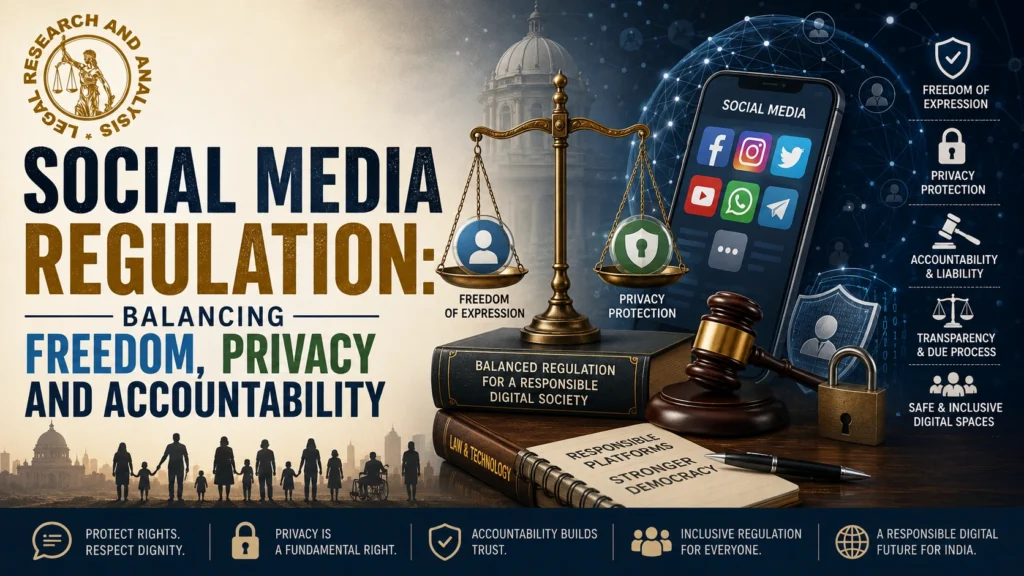
Recently, Justice Chandrachud spoke at the American Bar Association Indian Conference, 2023 on the topic “Law in the age of Globalization: Convergence of India and the West.” He stated that the Indian Constitution is a significant illustration of globalization even before the world entered the age of globalization. He further added that during the drafting of the Constitution, its creators may not have foreseen the direction in which humanity would develop. Justice also addressed the issue noting that the truth has become a victim in the age of false news. He went on to state that with the proliferation of social media, ideas that are presented as seeds often grow into elaborate, untested theories. Additionally, he observed that people today are less tolerant and patient when confronted with perspectives that differ from their own. 

Further as per Justice Chandrachud, just as technology and travel have connected people globally there has also been a trend towards individuals rejecting beliefs that do not align with their own. He cited the instance of the Indian Judiciary’s adoption of video conferencing during the COVID-19 pandemic as a gentle start that eventually expanded to all courts. In the modern world, we are surrounded by information. We have access to more news and data than ever before and it is easier to communicate with people from around the world. But with this increased access to information comes a significant problem the spread of false news. 

This statement from Justice also highlights the significant problem that we are facing today which is the spread of misinformation. False news stories can spread like wildfire on social media and it can be challenging to discern what is true and what is not. This concern has compounded the fact that people tend to gravitate towards sources of information that confirm their existing beliefs rather than seeking out diverse viewpoints. Another consequence of the spread of false news is the impact on public discourse. When people are exposed to false news stories, they may become more entrenched in their existing beliefs leading to a decrease in tolerance and an increase in polarization. This can lead to a situation where people are less willing to engage in constructive dialogue with those who hold different views further contributing to a breakdown in communication. 

Moreover, the problem of false news is not limited to social media. Traditional media sources have also been known to spread false information often with significant consequences. For instance, during the early days of COVID-19, some media outlets downplayed the severity of the virus leading to a delayed response and the unnecessary loss of life. So what can be done to address the concern of false news? One solution is to promote media literacy. People need to be taught how to identify false news stories and how to evaluate sources of information critically. By developing strong critical thinking skills people can become more discerning consumers of information and less likely to be swayed by false news stories. 

Another solution is to promote greater transparency in media sources. Media outlets should be held accountable for spreading false information and should be required to issue corrections when they make mistakes. Additionally, journalists should be encouraged to engage in fact-checking and to report on multiple sides of an issue rather than simply presenting one viewpoint. Moreover, it is also essential to promote a culture of tolerance and open dialogue. People need to feel comfortable expressing their views even if they are different from those of others. By creating an environment where people feel safe to express their opinions we can encourage greater understanding and tolerance between people. 

The spread of false news is a significant problem that is eroding the truth and contributing to a breakdown in communication. It is essential to find ways to address this issue such as promoting media literacy, promoting transparency in media sources and promoting a culture of tolerance and open dialogue. He said by doing so we can create a more informed and engaged society where people are better equipped to make informed decisions and to engage in constructive dialogue with those who hold different views. 

Career Option After LLB in India
27Jun

Career Option After LLB in India

Career Option After LLB in India: Jobs, Salary & Government Exams (2026 Guide) Blog Author (s) Adv. Jha Pranav Kumar…

Self-Executing Dispute Resolution via Smart Contracts
24Jun

Self-Executing Dispute Resolution via Smart Contracts

Self-Executing Dispute Resolution via Smart Contracts: Emerging Legal Hurdles and Prospects in Decentralized Financial Ecosystems VOLUME 3 ISSUE 2 Author…

Legal Notice Format India 2026
16Jun

Legal Notice Format India 2026

Legal Notice Format India 2026: Free Templates for Consumer, Cheque Bounce & Property Disputes Blog Author (s) LRA Table of…