Skip to content

Heading

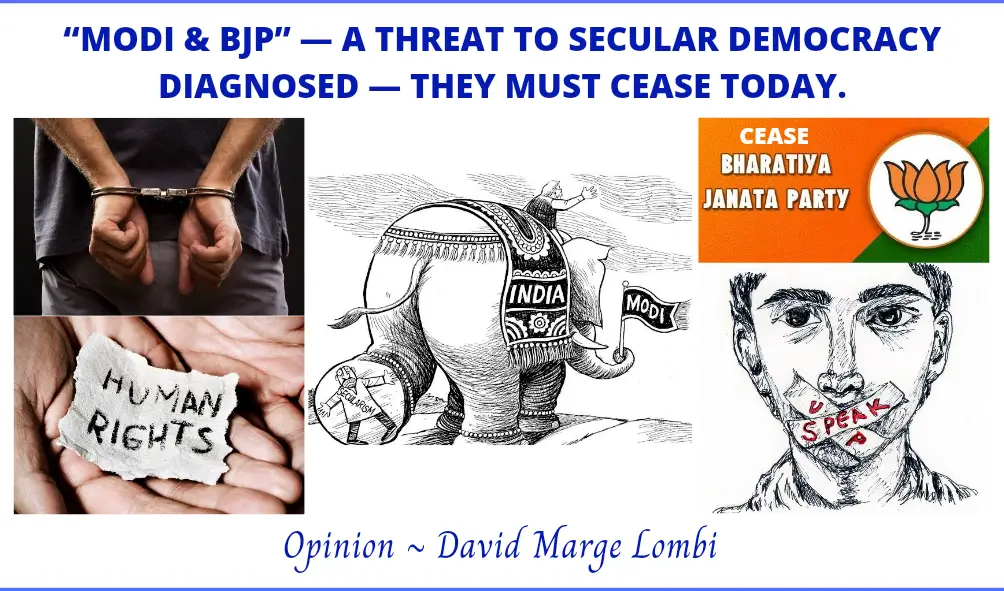
“MODI & BJP” — A THREAT TO SECULAR DEMOCRACY DIAGNOSED — THEY MUST CEASE TODAY

Table of Contents

ABSTRACT

Ayurveda is among the oldest systems of medicine in the world and has established its presence as part of the modern health care (HC) system, especially within the context of HC governance. Over the past few decades, there has been a significant increase in the formalisation (i.e., institutionalisation) of Ayurvedic practice in India through regulation, educational reform, and incorporation into public health programs, which has raised several important issues relating to patient safety, professional accountability, and quality of HC. While public trust in Ayurveda is high, as is political support for it, there are continuing concerns about issues such as: informed consent; false or misleading evidence for therapeutic benefit; standardisation of treatment protocols; and liability for malpractice. This article reviews the existing legal and regulatory framework applicable to Ayurveda in India, with a focus on comparing it to a sample of other approaches to regulating traditional or complementary medicine internationally. This research uses a doctrinal and comparative policy analysis to assess the effectiveness of current laws, professional regulatory systems, and ethical guidelines for protecting patients. The article also examines how the National Commission for the Indian System of Medicine, consumer protection laws, and the development of health care law have influenced accountability in the practice of Ayurvedic medicine. The study concludes that Ayurveda’s future legitimacy will depend on its continued reliance on its traditional foundation and its ability to meet the current expectations for transparency and evidence-based practice, informed consent, and patient-centred care. The article ends with a proposal for reforms to strengthen the regulatory framework while maintaining the cultural and therapeutic values associated with traditional healthcare systems.

KEYWORDS:

Ayurveda, Healthcare Regulation, Patient Protection, Medical Ethics, Legal Governance,
Traditional Medicine, AYUSH, Professional Liability

INTRODUCTION

The use of traditional forms of medicine is an important aspect of health care systems around the
world and the World Health Organisation (WHO) recognises that traditional and complementary
forms of medicine are key components of health care systems in many countries, especially
developing areas in which availability and cultural acceptability have a considerable bearing on
health care choices. Ayurveda, one of the many forms of traditional healthcare, is considered to be
one of the most comprehensive and longstanding forms of medical treatment.

India has made extensive efforts to develop and regulate Ayurvedic practice through legal and
regulatory organisations, quality of education requirements, licensing criteria and integration with
the public health care system. Although there continues to be widespread interest and use of
Ayurvedic medicine, the rapid growth of the Ayurvedic market and services has shown deficiencies
in the regulatory oversight of medical and therapeutic products, ethical compliance and safety and
protection of patients. There are increasing and significant demands for legal scrutiny regarding
issues related to the professional negligence of practitioners, informed consent policies, advertising
standards and testing for scientific validation of practitioners of Ayurvedic medicine.1

This article examines whether the existing legal framework adequately protects patients while
facilitating the growth of Ayurveda as a recognised healthcare system.

RESEARCH OBJECTIVES

To examine the legal framework governing Ayurveda in India.
To evaluate ethical accountability mechanisms applicable to Ayurvedic practitioners.
To compare Indian regulatory approaches with selected international models.
To assess challenges relating to patient protection and professional liability.
To propose policy reforms for strengthening regulatory governance.

LITERATURE REVIEW

The most recent literature has shown that there is a move from a system of regulating Ayurveda
strictly through education and professional registration. This new governance system consists of
four elements: patient safety, ethical accountability, quality assurance, and evidence-based
healthcare delivery. Most of the previous regulatory systems focused on the credentialing of
practitioners and standardising educational curricula; however, the current healthcare governance
model requires the use of legal mechanisms to ensure transparency, clinical competence,
accountability, and protection of patients’ rights. In addition, this movement reflects the increasing
integration of Ayurveda into national health systems and the increasing expectation that all forms
of traditional health care will conform with internationally recognised principles of professional
regulation and clinical governance.2

The WHO Benchmarks for the Practice of Ayurveda (2022) mark an important point in the
development of Ayurveda. They establish internationally acknowledged minimal competency
requirements for Ayurvedic practitioners, healthcare facilities and infrastructure; Medicaid records
or similar clinical documentation; informed consent from patients; patient confidentiality; a written
referral process; and regulatory oversight of this practice. The Benchmarks provide guidelines for
the integration of traditional medical practices with modern legal and ethical standards, while also
protecting and preserving Ayurvedic principles. The NCISM Act of 2020 has also strengthened
regulatory governance of all systems of medicine in India, including Ayurveda, through the
promotion of competency-based education, institutional accreditation, standardised professional
practices, and more accountable delivery of Ayurvedic healthcare.

The most current evidence supports the need for accountability through professional ethics in the
regulation of Ayurveda. The latest research demonstrates that professional ethics should include
both traditional values as well as aspects of contemporary professional ethics such as: informed
consent, patient autonomy, confidentiality, appropriate documentation, responsible prescribing,
and compliance with defined standards of care. Additionally, pharmacovigilance, quality control
of Ayurvedic products, adverse event reporting, and evidence-based clinical practice guidelines
are now viewed as important tools to enhance patient safety and build confidence in Ayurveda. As
stated in recent policy analyses, key components to improving the governance of Ayurveda include: implementing mandatory accreditation, using electronic patient records, having
standardised clinical practice guidelines, developing a mechanism for ongoing professional
education, having strong systems for monitoring the safety of medications, being non-partisan
when handling disciplinary procedures, and having credible legal systems to provide oversight.3

RESEARCH METHODOLOGY

This study adopts a doctrinal and comparative legal research methodology. Primary sources
include statutory enactments, governmental regulations, judicial decisions, and policy documents.
Secondary sources include scholarly articles, books, reports of international organisations, and
academic commentaries. Comparative analysis is undertaken with regulatory frameworks
governing traditional and complementary medicine in selected jurisdictions including China, the
United Kingdom, and Australia.

LEGAL GOVERNANCE OF AYURVEDA IN INDIA 4 5 6

Evolution of Regulations in Ayurveda Through History

The regulation of Ayurveda as a formal body has undergone many changes from when Ayurveda
was first recognised by colonists/colonial governments as an indigenous form of medicine to a
contemporary statutory regulatory framework. The government has developed several
initiatives since 1947 encouraging the development of a code of ethics to protect traditional
knowledge-based systems while still providing for the regulation, standardisation, and
professionalisation of Ayurvedic and other traditional healing systems.

National Commission For Indian Medicine Act (NCISM) 2020

There has been substantial reform to Ayurvedic governance with the National Commission for
Indian Medicine Act 2020. The statute streamlined previously existing regulations; this
act created standards for education, licensure as a practitioner, and oversight of the delivery of
Ayurvedic services.
The NCISM Act aims to increase transparency, accountability, and quality assurance regarding
services delivered under the Indian system of medicine; however, challenges remain related to the
implementation and enforcement of this legislation.

The Ministry of AYUSH As The Primary Governmental Authority

The Ministry of AYUSH serves as the primary government entity charged with the formation of
policies and regulations, promoting research, and coordinating with institutions that work with
Ayurveda and other forms of traditional medicine.

ETHICAL ACCOUNTABILITY IN AYURVEDA 7

Ethics and Responsibilities of Practitioners

Practitioners must maintain the following top priorities: the welfare of the patient, confidentiality,
competence and professional integrity. As the practice of Ayurveda continues to evolve, so too do
all the ethical standards that have been established for modern healthcare observers.

Informed Consent and Autonomy of Patients

Obtaining informed consent is becoming an essential principle within the field of health care law.
Patients are to be informed about their condition, available options, the benefits, disadvantages,
and risks of the identified options.
Patients do not fully understand the requirements of informed consent and conditions associated
with using Ayurvedic remedies. Since most patients view Ayurvedic remedies as “natural” and
thus, “safe”, a lack of disclosure about possible adverse consequences or side effects of
Ayurvedic methods is more common than with conventional methods

Fraudulent Advertising & Misleading Therapies

As the market for Ayurvedic therapy grows, so does the concern over the existence of exaggerated
therapeutic claims made by practitioners. Ethical regulatory oversight and guidance require the
use of legitimate data to support marketing initiatives and to genuinely promote Ayurvedic
therapies without misleading prospective customers.

PATIENT PROTECTION AND LEGAL LIABILITY 8

CONSUMER PROTECTION – LAWS THAT PROTECT CONSUMERS OF
HEALTHCARE

The Consumer Protection Act 2019 provides a mechanism for addressing the grievances of
consumers concerning healthcare services; therefore, Ayurveda practitioners can be liable for
claims made by patients as a result of failures or deficiencies in the health services provided.

PROFESSIONAL NEGLIGENCE BY AYURVEDA PRACTITIONERS

The issue of determining whether professional negligence has occurred in traditional medicine is
complicated legally. In making this determination, courts must apply both traditional healing
practices and contemporary standards of reasonable professional conduct of the practitioner.

Professional liability may arise from:

  • Failure to diagnose correctly;
  • Providing the wrong treatment;
  • Failure to obtain consent from patients prior to treatment;
  • Failing to maintain legible and accurate records; and
  • Making representations to patients regarding their chances of success or perceived benefit from
  • a treatment.


CURRENT TRENDS IN JUDICIAL DECISIONS

Comparative perspectives 9 10

China

China has created an integrated regulatory system in that it combines traditional Chinese medicine
with mainstream health care. The various types of regulatory oversight include practitioner
licensing, research standards and methods of quality control.

United Kingdom

The United Kingdom takes a relatively cautious stance on the regulation of traditional and
complementary therapies. Its regulatory structure is built on the premise of providing consumer
protection, professional registration, and truthful advertising.

Australia

Australia provides national regulation for complementary medicine through health care and
consumer protection laws. There is a strong emphasis placed on supporting evidence for making
claims about treatments and consumer safety.

The comparative analysis shows that the effective regulation of traditional and complementary
therapies requires:

  • Specific licensing standards;
  • Strong protections for patients’ rights;
  • Transparent regulatory mechanisms for disciplining practitioners;
  • Scientific evidence supporting the therapeutic claims made by practitioners; and
  • Strong mechanisms for consumers to pursue their complaints against practitioners.

ISSUES THAT POLICY MAKERS WILL ENCOUNTER IN THE 21ST
CENTURY

Almost all regulations regarding the use of Ayurvedic medicine will need to be improved upon in
order to address the following issues:

  • The absence of standard operating procedure (SOP) for performing treatments
  • The low rate of integration of informed consent throughout the continuum of care
  • A lack of public knowledge regarding their rights as patients
  • A significant lack of monitoring of advertisements and commercial claims for Ayurvedic products
  • Variability in the quality and competency level of the education received by Ayurvedic
  • practitioners.

By addressing these issues, we will build public trust in Ayurvedic medicine, as well as improve
health outcomes.

POLICY RECOMMENDATION

  1. Creation of an Adult Informed Consent Policy Method Specific to Ayurveda
  2. Use of Independent Grievance Resolution Processes for Patients Receiving Allopathic Medicine
  3. Strengthening Regulation and Oversight over all Advertising of Health Care Products and on the Internet and Providing Alternatives for Electronic Marketing
  4. Promotion of Evidence-Based Clinical Research into All Types of Health Care While Respecting Traditional Knowledge Systems
  5. Increase the Availability of Ethics Training in Ayurveda Education and Workforce
  6. Creation of National Standards for the Maintenance of Patient Records and Clinical Documentation
  7. Greater Coordination between AYUSH Regulators and Agencies Responsible for Consumer Protection.

CONCLUSION

The importance of Ayurveda in India’s health care system and cultural identity will remain as long
as there are strong legal and ethical protections. For traditional medical systems to continue
to be recognised as both legitimate and sustainable in the 21st century, and to serve as responsible
health care providers, they must operate within a framework that values patient autonomy,
accountability, transparency, and safety.


India has made gains in its ability to regulate Ayurveda through formalised legislative changes and
the establishment of institutional regulations. However, serious issues remain regarding issues
such as professional liability, informed consent, advertisements, and safeguarding patients.
Overall, these issues could benefit from more relevant legislation and policy. The experience of
other places shows that successfully regulating traditional medicine is not necessarily
detrimental to the body of evidence that supports it. Instead, good governance of traditional healing methods and their practitioners could contribute to enhancing public trust and improving
Ayurveda’s role in today’s health care system.


Career Option After LLB in India
27Jun

Career Option After LLB in India

Career Option After LLB in India: Jobs, Salary & Government Exams (2026 Guide) Blog Author (s) Adv. Jha Pranav Kumar…

Self-Executing Dispute Resolution via Smart Contracts
24Jun

Self-Executing Dispute Resolution via Smart Contracts

Self-Executing Dispute Resolution via Smart Contracts: Emerging Legal Hurdles and Prospects in Decentralized Financial Ecosystems VOLUME 3 ISSUE 2 Author…

Legal Notice Format India 2026
16Jun

Legal Notice Format India 2026

Legal Notice Format India 2026: Free Templates for Consumer, Cheque Bounce & Property Disputes Blog Author (s) LRA Table of…

Related Articles – Volume 3, Issue 2

Questions of medical negligence have acquired increasing importance in India as healthcare has moved into a more rights-conscious and legally supervised environment.… Continue reading

Waste generation has emerged as one of the most serious environmental challenges facing India today. Population growth, rapid urbanization, and increasing consumption patterns have… Continue reading

Environmental protection has become a global priority as industrialization and urban development continue to expand rapidly. Industries contribute significantly to economic growth… Continue reading

MODI & BJP — A THREAT TO SECULAR DEMOCRACY DIAGNOSED — THEY MUST CEASE TODAY

“MODI & BJP” — A THREAT TO SECULAR DEMOCRACY DIAGNOSED — THEY MUST CEASE TODAY

Table of Contents

Mr David Marge Lombi
Mr David Marge Lombi is a freelance journalist from the Northeastern State “Arunachal Pradesh”. At present, he is also pursuing B.A.LL.B (Hons.) at “North-Eastern Hill University, Shillong”. Spirited & catalyst by nature, he is one fierce voice who doesn’t sustain even near the mighty odds. While he advocates justice for the voiceless, his spirit holds that advocacy for “Civil Liberty” with a good taste of justice enables a “Humane State.” He is confident in his ability to produce.

“When an individual stands against the government, and that individual wins the battle, then it is the ultimate victory of Democracy.”

The good shepherd leaves his ninety-nine sheep in the wilderness and goes after the one that is lost until he finds it. When he has found it, he carries it on his shoulders, rejoicing. But let me remind Prime Minister Narendra Modi — your led team has never been that good shepherd, you and your led team have always failed from being even nearest to that good shepherd.

Today BJP will claim like any other monarch their greatest contributions so far. The claim of 99 goods may be true, I don’t vitiate, but they never cried and felt to restore that 1 lost sheep “Secular Democracy”.

Today India is in a state of undeclared emergency. Secular Democracy is under the attack of the BJP.

PATRIOTISM FOR MY COUNTRY IS NOT WHAT I END.

This call is neither a campaign in disguise for or against any political parties, nor is it an expression of contempt towards any hon’ble positions in the country.

Positions as such are of the utmost respect, but the spirit of illegitimacy on the part of the individuals elected to such hon’ble positions, and their taking of granted the votes of the loyal citizens are all that I cumulatively contest against wide-open. The wisdom of the “Rule of Law” that this very land has filled me with, shall keep me restless if I ever remain silent.

THE THIN-SKINNED BJP IS A THREAT TO SECULAR DEMOCRACY.

The threat by the BJP to the fabric of our Constitution has been unveiled before the nation. The lists of infamous decisions on the part of the BJP shall go on to infinity, but my paper is way too limited today.

Today in this era when the globe had recognized “free speech”, “personal liberty”, “freedom of religion” as basic human rights, BJP is still too fond of colonial and draconian laws that were once applied to us and had been left imposed on us by the British-shackles. From the very moment that BJP came into power to run the nation, all the noble essences that India always held have diminished.

From ordinary citizens to the legislature, young students to the journalists, opposition parties to the bureaucrats, all of them are left with the chilling effects. At this date, the people in the country merely have to come to the open streets with a democratic protest against BJP or its choices, and all of them shall be booked as terrorists or anarchists.

The important pillars and principles of democracy today fear to express themselves. There is an imminent fear of arbitrary and malafide prosecution amidst them. 

VOICES ECHOING TO QUASH BJP.

At this date, the entire nation is raising its legitimate plea — “a plea convincing everyone to quash BJP.” Citizens must quash every party in times to come that shall start superseding the citizens’ interests as BJP is evident to be doing today.

India needs to remind every political party and the government in the country — we make them by our votes and pay them by our taxes, so they must either fix these menaces or take back their speeches. 

CRIMINALS TURNED LEGISLATURES.

A study released in the year 2018 by the Association for Democratic Reforms (ADR) shows that the ruling Bharatiya Janata Party has the most number of MPs and MLAs with cases of crimes against women. No wonder that the BJP MPs and MLAs topped the chart of criminal cases more than any other political parties in India.

India recorded an increase of 44% in the number of MPs with declared criminal cases in 2019. By the end of the 2019 Lok Sabha term, the number of MPs charged with serious criminal offences has increased in 15 States, five of which have the BJP Government.

BIHAR, where the number has increased the most (from 8 to 18), is ruled by the Janata Dal United party. Since 2019, the Janata Dal United party has been a part of the ruling BJP-led National Democratic Alliance Government at the Centre.

UTTAR PRADESH, at the beginning of the term, had 12 MPs with serious criminal cases against them, the highest among all States. And then in 2019, it increased to 21.

IN MAHARASHTRA, it was 11 at the beginning of term, then in 2019, it increased to 19.

LET ME REMIND THE BJP.

In a secular democratic country, where we believe that even the judicial pronouncements can be criticised and that every government institution must be held accountable by the citizens, who is BJP today to be intolerant towards the criticisms levelled by the citizens. BJP must respond to this.

To stifle the voice of the countrymen, this party today avails the archaic weapons left by the British shackles. But let me remind this party that even Britishers themselves had done away with the archaic culture of colonial and draconian laws a very long ago.

Kevin Alfred Strom said, “To determine the true rulers of any society, all you must do is ask yourself this question: Who is it that I am not permitted to criticize?”

Opinion Disclaimer: The views and opinions expressed in this piece are personal of the author, and do not necessarily reflect the official policy or position of the team “Legal Research & Analysis”.

Career Option After LLB in India
27Jun

Career Option After LLB in India

Career Option After LLB in India: Jobs, Salary & Government Exams (2026 Guide) Blog Author (s) Adv. Jha Pranav Kumar…

Self-Executing Dispute Resolution via Smart Contracts
24Jun

Self-Executing Dispute Resolution via Smart Contracts

Self-Executing Dispute Resolution via Smart Contracts: Emerging Legal Hurdles and Prospects in Decentralized Financial Ecosystems VOLUME 3 ISSUE 2 Author…

Legal Notice Format India 2026
16Jun

Legal Notice Format India 2026

Legal Notice Format India 2026: Free Templates for Consumer, Cheque Bounce & Property Disputes Blog Author (s) LRA Table of…