HEALTHCARE ACCESSIBILITY AND EQUITY IN INDIA
HEALTHCARE ACCESSIBILITY AND EQUITY IN INDIA VOLUME 3 ISSUE 2 SREEVINDA CHALLAPALLI Full Text PDF Download Table of Contents ABSTRACT…

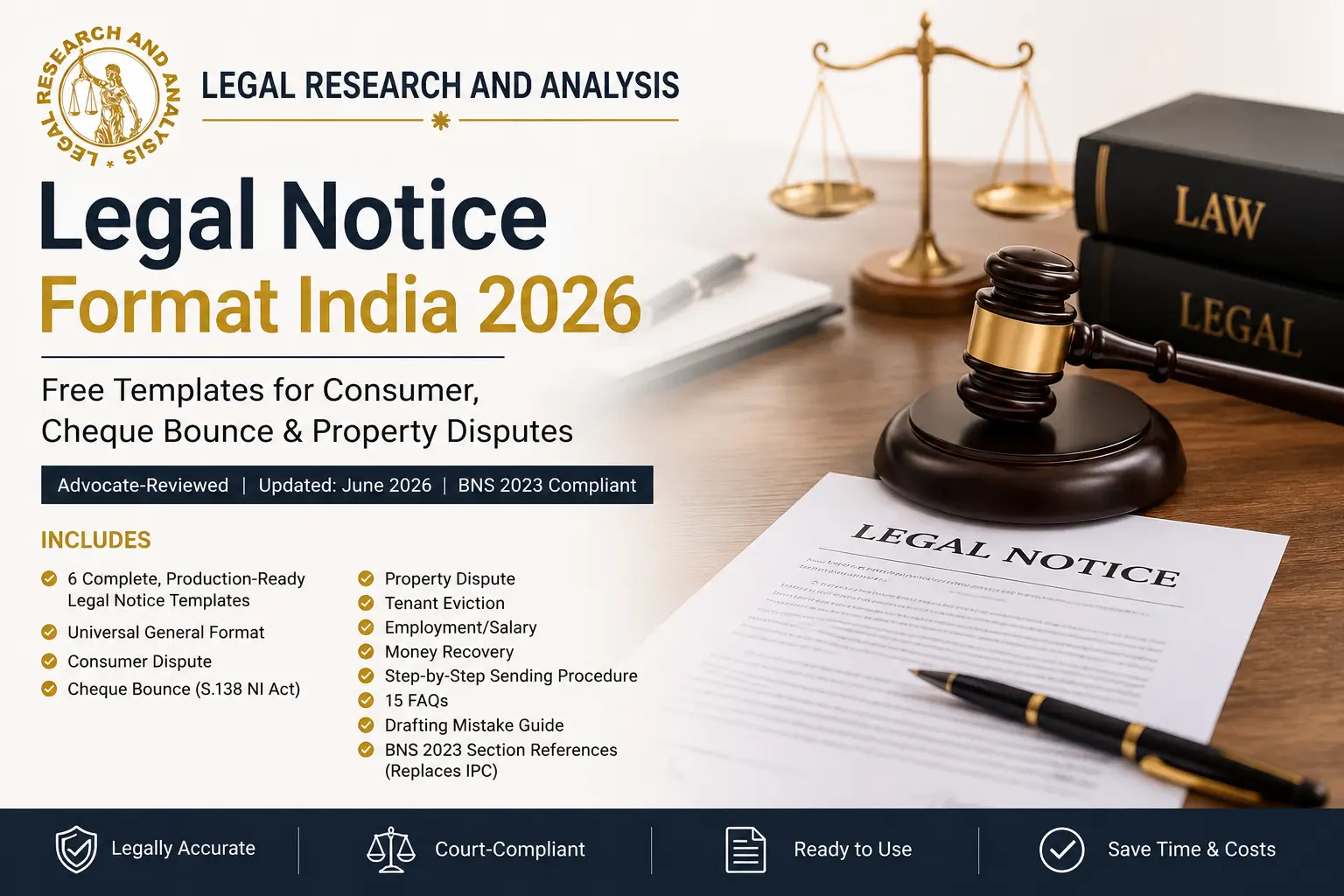
A legal notice is often the single most powerful tool in a litigant’s arsenal — more potent than many realise. In India, a well-drafted legal notice format can resolve disputes that would otherwise consume years and lakhs of rupees in litigation. Statistics from district courts across India consistently show that a large proportion of money recovery and property disputes reach settlement at the notice stage itself, before a single vakalatnama is filed in court.
Whether you are a law student learning the basics, an advocate drafting for a client, a business owner dealing with a payment default, or an individual fighting a consumer fraud — understanding the correct legal notice format India 2026 is non-negotiable.
The law has evolved. The Bharatiya Nyaya Sanhita (BNS), 2023 has replaced the Indian Penal Code. Courts have tightened their scrutiny of pre-litigation notices. And digital modes of service are being tested in jurisprudence every month.
This guide gives you everything: the legal framework, complete ready-to-use templates for six major dispute categories, drafting mistakes that destroy cases, step-by-step sending procedure, and 15 FAQs targeting every question judges and practitioners actually face.
| FEATURED DEFINITION |
|---|
| A legal notice is a formal written communication sent by one party to another, informing the recipient of a legal grievance, demanding specific relief, and providing a final opportunity to resolve the dispute before legal proceedings are initiated. |
| In India, it functions as both a pre-litigation tool and, in certain statutes, a mandatory procedural requirement without which a case cannot be filed. |
Unlike ordinary correspondence, a legal notice carries the weight of law behind it. It is typically issued on an advocate’s letterhead, cites specific legal provisions, and creates a dated record that becomes critical evidence in subsequent court proceedings.
The purpose of a legal notice is threefold: it puts the other party on formal notice of the legal claim against them; it gives them a last opportunity to settle without the cost and delay of litigation; and it crystallises the cause of action in writing, preventing the sender from later claiming a different set of facts in court.
| ⚖ ADVOCATE’S INSIGHT |
|---|
| In the post-BNS era (2024 onwards), criminal notices must now cite sections of the Bharatiya Nyaya Sanhita, 2023 rather than the IPC. For example: |
| • Cheating = BNS Section 318 (formerly IPC Section 420) |
| • Criminal Breach of Trust = BNS Section 316 (formerly IPC Section 406) |
| • Criminal Trespass = BNS Section 329 (formerly IPC Section 441) |
| Using old IPC citations in a 2026 criminal legal notice is a technical error opposing counsel will exploit. |
While a legal notice is advisable in virtually any pre-litigation dispute, it is statutorily mandatory in certain categories. The table below maps common dispute types to notice requirements:
| Dispute Type | Notice Mandatory? | Legal Basis | Notice Period |
|---|---|---|---|
| Cheque Bounce | ✔ Mandatory | Section 138, Negotiable Instruments Act, 1881 | 30 days from dishonour; 15 days to pay after notice |
| Suit Against Government | ✔ Mandatory | Section 80, CPC, 1908 | 2 months before filing suit |
| Money Recovery (Private) | ✘ Not Mandatory — but strongly advised | Indian Contract Act, 1872 / CPC | Usually 15–30 days |
| Consumer Dispute | ✘ Not Mandatory — but shows good faith | Consumer Protection Act, 2019 | Usually 15–30 days |
| Property / Encroachment | ✘ Not Mandatory — but advised | Transfer of Property Act, 1882 / Specific Relief Act | 30 days typical |
| Tenant Eviction | ✔ Statutory in most state Rent Acts | State-specific Rent Control Acts | 15–30 days (state-dependent) |
| Employment / Salary | ✘ Not Mandatory for Labour Court | Payment of Wages Act / ID Act / BNS 408 | 15–30 days |
| Breach of Contract | ✘ Not Mandatory — but required if contract specifies | Indian Contract Act, 1872 | As specified in contract / 30 days |
| Matrimonial / Maintenance | ✘ Not Mandatory | Hindu Marriage Act / BNSS provisions | 15–30 days |
| ⚠ CRITICAL FOR 2026 | |||
| The Bharatiya Nagarik Suraksha Sanhita (BNSS), 2023 has replaced the CrPC. Any criminal notice referencing old CrPC sections (e.g., Sections 200, 202) must now cite the corresponding BNSS sections. Always verify current section numbers before issuing a criminal pre-litigation notice. | |||
A legal notice that is deficient in even one mandatory element can be declared invalid — and in statutory cases, this deficiency means the entire case fails at the threshold. Here is the complete checklist every notice must satisfy:
✔ Advocate’s Letterhead: Full name, address, mobile, email, and Bar Council enrollment number of the drafting advocate. Without an enrollment number, the notice carries no professional authority.
✔ Date of Notice: Critical for calculating statutory deadlines. Always write the full date: DD/MM/YYYY.
✔ Sender’s Full Particulars: Complete name, postal address with pin code, and relationship to the advocate (i.e., ‘my client’). For companies: CIN number and registered office address.
✔ Recipient’s Full Particulars: Full legal name and complete postal address including pin code. An incorrect address is the single most common reason a notice fails.
✔ Subject Line: A single, precise line stating the nature of the notice and, where applicable, the legal provision (e.g., ‘Notice under Section 138 of the Negotiable Instruments Act, 1881’).
✔ Salutation: Standard ‘Sir/Madam’ or ‘Dear Sir/Madam’ as appropriate.
✔ Chronological Statement of Facts: A factual, date-wise narrative of events leading to the dispute. This section becomes the backbone of your plaint — inconsistencies between the notice and plaint will be exploited by opposing counsel.
✔ Legal Provisions Invoked: Cite the specific Act and section. In 2026, use BNS sections for criminal matters and ensure CPC references are current.
✔ Specific Relief Demanded: State the exact demand — a precise rupee amount, a specific act to be performed, or possession of a specific property. Vague demands like ‘settle the matter’ weaken your position.
✔ Compliance Deadline: Specify the number of days from receipt of the notice within which the recipient must comply. Where statutory, match the required period exactly.
✔ Consequence of Non-Compliance: A clear statement that failure to comply will result in appropriate legal proceedings before the competent forum, at the recipient’s risk, cost, and consequences.
✔ Enclosures / Evidence: List all attached documents (copies of agreements, invoices, bank memos, photographs, emails). Attaching evidence dramatically strengthens the notice.
✔ Advocate’s Signature and Seal: The notice must close with the advocate’s handwritten or digital signature and official seal.
✔ Sender’s Acknowledgement Line: A line confirming that the notice is issued under instructions from the named client.
The following template applies to most civil, commercial, and contractual disputes. Replace all [bracketed fields] with your specific details. This template is advocate-ready and court-approved in structure.
| FREE TEMPLATE — GENERAL LEGAL NOTICE |
|---|
| ADV. [ADVOCATE’S FULL NAME] |
| Advocate, [High Court / District Court Name] |
| Bar Council Enrollment No.: [BCI/STATE/YEAR/XXXXX] |
| Office: [Complete Office Address] |
| Mobile: [+91 XXXXXXXXXX] |
| Email: [advocate@email.com] |
| Date: [DD/MM/YYYY] |
| To, |
| [Full Name of Recipient] |
| S/o / D/o / W/o [Father’s/Husband’s Name] |
| [Complete Postal Address, Street, City] |
| [State – PIN Code] |
| SUBJECT: LEGAL NOTICE FOR [BRIEF SUBJECT – e.g., RECOVERY OF DUES / BREACH OF CONTRACT] |
| Sir/Madam, |
| Under the specific instructions from and on behalf of my client, [Client’s Full Name], S/o [Father’s Name], residing at [Client’s Complete Address] (hereinafter referred to as “my client”), I hereby serve upon you this legal notice as follows: |
| FACTS: |
|
1. That [state chronological fact 1 with date]. 2. That [state chronological fact 2 with date]. 3. That [state chronological fact 3 – the event constituting the dispute/breach]. 4. That despite repeated requests/reminders on [dates], you have failed and neglected to [comply / pay / vacate / perform] as agreed/required. |
| LEGAL BASIS: |
| 5. That your aforesaid conduct constitutes a breach of [legal provision / agreement] and renders you liable under [relevant Act, Section numbers]. |
| DEMAND: |
| 6. You are hereby called upon to [state specific demand – e.g., pay the outstanding sum of ₹[AMOUNT] along with interest at [X]% per annum from [date]] within [15/30] days from the date of receipt of this notice. |
| CONSEQUENCE: |
| 7. Take notice that in the event of your failure to comply, my client shall be constrained to initiate appropriate legal proceedings, civil and/or criminal, before the competent court/tribunal, entirely at your risk, cost, and consequences, without any further notice to you. |
| 8. My client expressly reserves all rights and remedies available under law. |
| A copy of this notice is retained in my office for record. |
|
Yours faithfully, [ADVOCATE’S SIGNATURE] [Advocate’s Full Name] Advocate [Date] |
| ENCLOSURES: |
|
1. [Copy of Agreement / Invoice / Bank Statement / Cheque, as applicable] 2. [Any other relevant document] |
Consumer disputes are governed by the Consumer Protection Act, 2019 and handled by District Consumer Disputes Redressal Commissions (DCDRC), State Commissions, and the National Commission (NCDRC). A pre-complaint legal notice puts the seller/service provider on formal notice and often triggers refunds or settlements without filing.
Use this notice for: defective products, deficiency of service, unfair trade practices, refund denial, e-commerce disputes, and medical negligence (preliminary stage).
| FREE TEMPLATE — CONSUMER DISPUTE LEGAL NOTICE |
|---|
| ADV. [ADVOCATE’S FULL NAME] |
| Advocate |
| Bar Council Enrollment No.: [BCI/STATE/YEAR/XXXXX] |
| [Address, City, PIN Code] |
| Mobile: [+91 XXXXXXXXXX] | Email: [advocate@email.com] |
| Date: [DD/MM/YYYY] |
| To, |
| The Managing Director / Customer Service Head |
| [Company/Seller/Service Provider Name] |
| [Registered Office Address] |
| [City – PIN Code] |
| AND ALSO TO: |
| [Manufacturer’s Name, if different] | [Complete Address] |
| SUBJECT: LEGAL NOTICE UNDER THE CONSUMER PROTECTION ACT, 2019 FOR [REFUND / REPLACEMENT / COMPENSATION] IN RESPECT OF [PRODUCT/SERVICE NAME] |
| Sir/Madam, |
| Under instructions from my client, [Client’s Full Name], residing at [Client’s Address] (hereinafter referred to as the “Complainant”), I issue this legal notice as under: |
| FACTS: |
|
1. That on [date], my client purchased [Product / availed Service] from your establishment for ₹[Amount] vide Invoice No. [XXXX] dated [date]. Copy enclosed. 2. That the said [product/service] was found to be [defective / substandard / not delivered / deficient in service] in the following manner: [describe defect]. 3. That my client reported the complaint on [date/s] via [email/phone] (Ref No. [XXXX]) and requested [refund/replacement/rectification]. 4. That despite [X days] elapsed, you have [refused refund / failed to respond / issued only partial refund of ₹[Amount]] against the full claim of ₹[Amount]. |
| LEGAL BASIS: |
|
5. Your conduct constitutes ‘deficiency in service’ and/or ‘unfair trade practice’ under Sections 2(11) and 2(47) of the Consumer Protection Act, 2019. My client is a ‘consumer’ as defined under Section 2(7) of the said Act. |
| DEMAND: |
|
6. You are hereby called upon to: (a) Refund the full amount of ₹[Amount] (Rupees [Amount in Words] only); (b) Replace the defective [Product] with a brand new unit; (c) Pay compensation of ₹[Amount] for mental agony and inconvenience; (d) Reimburse incidental expenses of ₹[Amount]; — all within 15 (Fifteen) days from receipt of this notice. |
| CONSEQUENCE: |
| 7. Failure to comply shall constrain my client to file a complaint before the appropriate Consumer Disputes Redressal Commission under the Consumer Protection Act, 2019, seeking the above relief plus litigation costs, at your sole risk and cost. |
|
Yours faithfully, [ADVOCATE’S SIGNATURE] | [Advocate’s Full Name] | Advocate |
| ENCLOSURES: |
|
1. Copy of Invoice / Order Confirmation 2. Screenshot / Evidence of Defect 3. Copies of Complaint Emails / Chat Logs |
Cheque bounce cases under Section 138 of the Negotiable Instruments Act, 1881 are the most time-sensitive legal notices in Indian law. Fail to issue the notice within 30 days of the bank’s dishonour memo, and your right to prosecute is extinguished.
| Requirement | Statutory Mandate | Consequence of Default |
|---|---|---|
| Notice must be issued within 30 days of receiving the bank’s dishonour memo | Section 138 Proviso (b), NI Act | Complaint becomes non-maintainable |
| Payee must give drawer 15 days to make payment after notice | Section 138 Proviso (c), NI Act | Complaint premature if filed before 15 days |
| Complaint must be filed within 1 month after expiry of 15-day period | Section 142(1)(b), NI Act | Complaint barred by limitation |
| Notice must demand payment of the exact cheque amount | Judicially settled — Supreme Court | Demand mismatch weakens the case |
| Send by Registered Post with Acknowledgement Due (RPAD) | Judicially preferred mode | Service proof becomes contestable |
| ⚠ 2026 ALERT — BNS SECTIONS | ||
While Section 138 NI Act remains unchanged, if you are also citing criminal offences alongside the NI Act notice, cite:
|
||
| FREE TEMPLATE — CHEQUE BOUNCE LEGAL NOTICE (SECTION 138 NI ACT) |
|---|
| ADV. [ADVOCATE’S FULL NAME] |
| Advocate |
| Bar Council Enrollment No.: [BCI/STATE/YEAR/XXXXX] |
| [Address, City, PIN Code] |
| Mobile: [+91 XXXXXXXXXX] | Email: [advocate@email.com] |
| Date: [DD/MM/YYYY] |
| To, |
| [Full Name of Drawer / Accused] | S/o [Father’s Name] |
| [Complete Postal Address – PIN Code] |
| [If Company: The Managing Director / Authorised Signatory, Company Name, Registered Office Address] |
| SUBJECT: STATUTORY DEMAND NOTICE UNDER SECTION 138 READ WITH SECTION 141 OF THE NEGOTIABLE INSTRUMENTS ACT, 1881 — CHEQUE NO. [XXXXXX] DATED [DATE] FOR ₹[AMOUNT] DRAWN ON [BANK NAME, BRANCH] RETURNED DISHONOURED |
| Sir/Madam, |
| Under the specific instructions from my client, [Payee’s Full Name], residing at [Payee’s Address] (hereinafter referred to as “my client”), I issue this statutory demand notice: |
| FACTS: |
|
1. That you issued Cheque No. [XXXXXX] dated [date] for ₹[AMOUNT] drawn on [Bank Name], [Branch], [Account No.], towards discharge of legally enforceable liability / repayment of loan advanced on [date] / payment for goods/services. 2. That the aforesaid cheque was duly deposited by my client in his/her account with [Client’s Bank, Branch] on [date of deposit]. 3. That the said cheque has been returned dishonoured by the drawee bank on [date] with the remark “[INSUFFICIENCY OF FUNDS / ACCOUNT CLOSED / PAYMENT STOPPED]”. A copy of the bank memo is enclosed. 4. That my client received the bank’s dishonour memo on [date of receipt]. |
| LEGAL BASIS: |
|
5. The dishonour constitutes an offence under Section 138 of the Negotiable Instruments Act, 1881 as the cheque was issued towards discharge of a legally enforceable debt/liability. 6. [If company] You are jointly and severally liable as Director / MD under Section 141 of the NI Act, 1881. |
| DEMAND: |
| 7. You are hereby called upon to pay ₹[AMOUNT] (Rupees [Amount in Words] only) within 15 (Fifteen) days from the date of receipt of this notice, failing which my client shall initiate criminal prosecution under Section 138 NI Act before the competent Magistrate Court, at your sole risk and cost. |
| 8. Upon prosecution, you shall be liable to imprisonment up to 2 years and/or fine up to double the cheque amount under Section 138 NI Act. |
| 9. This notice is being sent within the statutory period of 30 days from receipt of the bank’s dishonour memo. |
|
Yours faithfully, [ADVOCATE’S SIGNATURE] | [Advocate’s Full Name] | Advocate |
| ENCLOSURES: |
|
1. Copy of dishonoured cheque (front and back) 2. Copy of bank’s cheque return / dishonour memo 3. Copy of loan agreement / invoice / acknowledgement of debt |
Property disputes are among the most complex and emotionally charged legal matters in India. A legal notice in a property dispute typically involves encroachment, disputed ownership, illegal occupation, or boundary disputes. The notice must cite the correct Act — Transfer of Property Act, 1882; Specific Relief Act, 1963; and BNS Section 329 (previously IPC Section 441) for criminal trespass.
| FREE TEMPLATE — PROPERTY DISPUTE / ENCROACHMENT LEGAL NOTICE |
|---|
| ADV. [ADVOCATE’S FULL NAME] |
| Advocate |
| Bar Council Enrollment No.: [BCI/STATE/YEAR/XXXXX] |
| [Address, City, PIN Code] |
| Date: [DD/MM/YYYY] |
| To, |
|
[Full Name of Encroacher / Opposite Party] S/o [Father’s Name] | [Complete Postal Address – PIN Code] |
| SUBJECT: LEGAL NOTICE FOR REMOVAL OF ILLEGAL ENCROACHMENT / ILLEGAL OCCUPATION OF PROPERTY — PROPERTY SITUATED AT [PROPERTY ADDRESS] |
| Sir/Madam, |
| Under instructions from my client, [Client’s Full Name], residing at [Client’s Address]: |
| FACTS: |
|
1. That my client is the absolute owner of the property bearing [Plot/Survey/Khasra/Flat No.], situated at [Complete Property Address], admeasuring approximately [area], deriving title from [Sale Deed/Will/Inheritance/Gift Deed] dated [date], registered at [Sub-Registrar Office], Reg. No. [XXX]. 2. That the said property has been in the exclusive possession of my client since [date]. 3. That you have, without any legal right, title, or authority, encroached upon / illegally occupied / demolished the boundary wall of the said property since approximately [date]: [describe specific encroachment/act]. 4. That my client has made repeated requests to you to vacate / remove the encroachment on [dates], which you have deliberately ignored. |
| LEGAL BASIS: |
| 5. Your aforesaid conduct amounts to criminal trespass under Section 329 of the Bharatiya Nyaya Sanhita, 2023 (BNS). You are also liable under the Transfer of Property Act, 1882 and amenable to suit for permanent injunction and mandatory injunction under the Specific Relief Act, 1963. |
| DEMAND: |
|
6. You are hereby called upon to: (a) Vacate and hand over peaceful possession of the illegally occupied portion; (b) Remove all structures/materials erected without permission; (c) Restore the boundary wall to its original condition; (d) Pay damages of ₹[Amount]/month for illegal occupation from [date]; — all within 30 (Thirty) days from receipt of this notice. |
| CONSEQUENCE: |
| 7. Failure to comply shall leave my client with no option but to initiate civil proceedings for permanent and mandatory injunction, recovery of damages, and declaration of title, plus a criminal complaint under Section 329 BNS, 2023, entirely at your risk, cost, and consequences. |
|
Yours faithfully, [ADVOCATE’S SIGNATURE] | [Advocate’s Full Name] | Advocate |
| ENCLOSURES: |
|
1. Copy of Sale Deed / Title Document 2. Copy of Property Tax Receipts / Khata 3. Photographs Evidencing Encroachment (with dates) |
Tenant eviction notices must comply with the applicable State Rent Control Act. Most state laws require a notice of 15–30 days before the landlord can initiate eviction proceedings. Always verify the applicable state legislation before issuing an eviction notice.
| FREE TEMPLATE — TENANT EVICTION / RENT RECOVERY LEGAL NOTICE |
|---|
| ADV. [ADVOCATE’S FULL NAME] |
| Advocate |
| Bar Council Enrollment No.: [BCI/STATE/YEAR/XXXXX] |
| [Address, City, PIN Code] |
| Date: [DD/MM/YYYY] |
| To, |
| [Tenant’s Full Name] | S/o [Father’s Name] |
| [Tenanted Premises Address / Tenant’s Other Known Address] |
| SUBJECT: LEGAL NOTICE TO VACATE THE TENANTED PREMISES SITUATED AT [PROPERTY ADDRESS] AND FOR RECOVERY OF ARREARS OF RENT OF ₹[AMOUNT] |
| Sir/Madam, |
| Under instructions from my client, [Landlord’s Full Name], owner of premises at [Complete Property Address] (hereinafter “the said premises”): |
| FACTS: |
|
1. The said premises were let out to you on a monthly rent of ₹[Amount] per month vide Rent Agreement dated [date], for a period of [X months/years] from [date]. Copy enclosed. 2. That the said tenancy [has expired on date] / is a month-to-month tenancy terminable by notice. 3. That you have wilfully defaulted in payment of rent for [months], causing arrears of ₹[Total Arrear Amount] (Rupees [Amount in Words] only) as on date. 4. [Optional] That you have sublet the said premises to [name] without the written consent of the Landlord, which is a breach of tenancy terms and a ground for eviction under the applicable Rent Control Act. |
| LEGAL BASIS: |
| 5. Your default entitles the Landlord to terminate the tenancy and recover possession under [Applicable State Rent Control Act] and the Transfer of Property Act, 1882. |
| DEMAND: |
|
6. You are hereby called upon to: (a) Pay the total outstanding rent of ₹[Amount] forthwith; (b) Vacate the said premises and hand over peaceful possession within 30 days from receipt of this notice. |
| CONSEQUENCE: |
| 7. Failure to comply shall result in eviction proceedings and a suit for recovery of arrears before the appropriate Rent Controller/Civil Court, at your risk and cost. |
|
Yours faithfully, [ADVOCATE’S SIGNATURE] | [Advocate’s Full Name] | Advocate |
| ENCLOSURES: |
|
1. Copy of Rent / Lease Agreement 2. Rent Receipt Records 3. Copy of Title Document of the Landlord |
Employment disputes — wrongful termination, unpaid salary, gratuity denial, and PF non-deposit — can be addressed through pre-litigation notices. For salary matters, the Payment of Wages Act, 1936 and Payment of Gratuity Act, 1972 apply. BNS Section 408 may also be invoked in appropriate cases.
| FREE TEMPLATE — EMPLOYMENT / SALARY RECOVERY LEGAL NOTICE |
|---|
| ADV. [ADVOCATE’S FULL NAME] |
| Advocate |
| Bar Council Enrollment No.: [BCI/STATE/YEAR/XXXXX] |
| [Address, City, PIN Code] |
| Date: [DD/MM/YYYY] |
| To, |
| The Managing Director / CEO / HR Head |
| [Employer Company Name] |
| [Registered Office Address] |
| SUBJECT: LEGAL NOTICE FOR RECOVERY OF OUTSTANDING SALARY ARREARS / ILLEGAL TERMINATION / NON-ISSUANCE OF RELIEVING LETTER — FOR PERIOD [FROM] TO [TO] |
| Sir/Madam, |
| Under instructions from my client, [Employee’s Full Name], [Designation], Employee ID [XXXX], who was employed with your organization: |
| FACTS: |
|
1. That my client joined on [Date of Joining] as [Designation] at monthly CTC/Salary of ₹[Amount] per month vide Offer Letter / Employment Agreement dated [date]. Copy enclosed. 2. [If salary default] That your organization has failed to pay the following dues: • Salary for months [months]: ₹[Amount] • Bonus / Variable Pay for [period]: ₹[Amount] • Notice pay in lieu of notice period: ₹[Amount] • Gratuity (Payment of Gratuity Act, 1972): ₹[Amount] [if 5+ years employment] • Total outstanding: ₹[TOTAL AMOUNT] 3. [If wrongful termination] That on [date], your organization terminated my client’s services without adequate notice / payment in lieu / just cause / opportunity to be heard — constituting illegal termination under the applicable Shops & Establishment Act / Standing Orders / Employment Agreement. 4. That your organization has failed to issue [Form 16 / Relieving Letter / Experience Certificate / PF Transfer / Full & Final Settlement] despite repeated requests on [dates]. |
| LEGAL BASIS: |
| 5. Your failure constitutes a violation of the Payment of Wages Act, 1936 and the Employment Agreement. Non-payment of gratuity (where applicable) is an offence under Section 9 of the Payment of Gratuity Act, 1972. |
| DEMAND: |
|
6. You are hereby called upon to: (a) Pay the total outstanding dues of ₹[TOTAL AMOUNT] within 15 (Fifteen) days; (b) Issue the Relieving Letter, Experience Certificate, and Form 16 within 15 days; (c) Complete PF withdrawal/transfer formalities immediately. |
| CONSEQUENCE: |
| 7. Non-compliance shall result in proceedings before the Labour Court / Payment of Wages Authority / Gratuity Authority and/or a civil suit for recovery, at your sole risk and cost. |
|
Yours faithfully, [ADVOCATE’S SIGNATURE] | [Advocate’s Full Name] | Advocate |
| ENCLOSURES: |
|
1. Copy of Offer Letter / Employment Agreement 2. Salary Slips for Period of Employment 3. Bank Statements Reflecting Salary Defaults 4. Correspondence Regarding Salary / Termination |
Money recovery notices are the most commonly issued notices in India. Key drafting considerations: cite the exact amount (including interest calculations); specify the mode of advance (NEFT/bank transfer/cheque/UPI — with UTR/reference numbers); and attach the strongest available documentary evidence.
Important
| FREE TEMPLATE — MONEY RECOVERY LEGAL NOTICE |
|---|
| ADV. [ADVOCATE’S FULL NAME] |
| Advocate |
| Bar Council Enrollment No.: [BCI/STATE/YEAR/XXXXX] |
| [Address, City, PIN Code] |
| Date: [DD/MM/YYYY] |
| To, |
| [Full Name of Debtor] | S/o [Father’s Name] |
| [Complete Postal Address – PIN Code] |
| SUBJECT: LEGAL NOTICE FOR RECOVERY OF OUTSTANDING DUES OF ₹[AMOUNT] (RUPEES [AMOUNT IN WORDS] ONLY) |
| Sir/Madam, |
| Under the specific instructions from my client, [Creditor’s Full Name], residing at [Creditor’s Address], I issue this legal notice as under: |
| FACTS: |
|
1. That my client advanced ₹[Amount] (Rupees [Amount in Words] only) to you on [date] by way of [NEFT/UPI/bank transfer/cheque – UTR No./Ref. No.] for the purpose of [loan / business investment / advance for services / purchase advance]. A copy of the bank transaction record is enclosed. 2. That the said amount was to be repaid by [date / in monthly instalments of ₹Amount] as per the [oral understanding / written agreement / promissory note]. [Attach copy of agreement/promissory note where applicable.] 3. That you have paid only ₹[Partial Amount] on [date/s], leaving a balance of ₹[Balance Amount] outstanding. 4. That despite repeated requests — oral and in writing — on [dates], you have failed, neglected, and refused to repay the outstanding amount. |
| LEGAL BASIS: |
|
5. Your failure constitutes a clear breach of your legal and contractual obligation under the Indian Contract Act, 1872. 6. [If intentional default with fraud evidence] Your deliberate default also constitutes cheating under Section 318 of the Bharatiya Nyaya Sanhita, 2023. |
| DEMAND: |
| 7. You are hereby called upon to pay the outstanding principal of ₹[Amount] with interest at [X]% per annum from [date] to date of actual payment, totalling ₹[TOTAL AMOUNT including interest], within 15 (Fifteen) days from receipt of this notice. |
| CONSEQUENCE: |
| 8. Failure to comply shall result in a civil suit for recovery under Order XXXVII CPC, 1908 (Summary Procedure) and/or a criminal complaint under Section 318 BNS, 2023, before the competent court, at your sole risk and cost. |
|
Yours faithfully, [ADVOCATE’S SIGNATURE] | [Advocate’s Full Name] | Advocate |
| ENCLOSURES: |
|
1. Copy of Bank Transfer / NEFT / UPI Transaction Record 2. Copy of Loan Agreement / Promissory Note (if any) 3. Copies of Previous Correspondence / WhatsApp Chats / Emails |
| Step | Action | Key Points |
|---|---|---|
| Step 1 | Draft the Notice | Engage an advocate. Ensure all 14 elements are present. Cite correct BNS/NI Act/CPC sections. Double-check the recipient’s address. |
| Step 2 | Compile & Attach Evidence | Attach certified/self-attested copies of all relevant documents. Do not send originals. Number and list all enclosures in the notice itself. |
| Step 3 | Advocate Signs and Seals | The advocate must sign with seal on the office letterhead. For companies with in-house counsel, include Bar Council number. |
| Step 4 | Send by Registered Post (RPAD) | Use Registered Post with Acknowledgement Due (AD) from the nearest India Post branch. This is the gold standard for court purposes. Speed Post also acceptable. |
| Step 5 | Keep Records of Dispatch | Retain the postal receipt, tracking number, and the returned Acknowledgement Card (AD Card). Scan and save digital copies immediately. |
| Step 6 | Send by Email (Supplement) | Email a PDF copy of the signed notice to the recipient’s known email address simultaneously. This creates an additional trail. |
| Step 7 | Wait for Response | Allow the specified period to elapse. If notice is returned “refused” or “unclaimed” — still legally valid service under Section 27 of the General Clauses Act, 1897. |
| Step 8 | Initiate Legal Action if No Compliance | File in the appropriate forum within the applicable limitation period. Never wait indefinitely after the notice period expires. |
| PROOF OF SERVICE | ||
| If the recipient refuses to accept the notice or the envelope is returned undelivered, this is still valid service in most cases. Under Section 27 of the General Clauses Act, 1897, service by Registered Post is deemed complete when posted. Preserve the returned envelope with the postal endorsement — courts have consistently held that a party cannot defeat a notice by simply refusing to accept it. | ||
Advocates consistently see the same set of errors in poorly drafted notices — particularly self-drafted ones. These mistakes range from technical defects that invalidate the notice to strategic errors that damage your position in subsequent litigation.
✗ Using IPC Sections After BNS: The Bharatiya Nyaya Sanhita, 2023 replaced the IPC from July 2024. Citing IPC Section 420 (cheating) or IPC Section 406 (criminal breach of trust) in a 2026 notice is technically incorrect. Use BNS Section 318 and BNS Section 316 respectively.
✗ Incorrect or Incomplete Recipient Address: The most common single reason for service failure. Verify the recipient’s address from official records. A notice returned ‘address not known’ may not constitute valid service.
✗ Mismatch Between Notice Demand and Plaint Prayers: Courts frequently compare the demand in the notice with the reliefs prayed in the plaint. A significant mismatch — especially in cheque bounce matters — is exploited by defence counsel.
✗ Emotional and Abusive Language: Legal notices are court documents. Phrases like ‘you are a fraud and a cheat’ can expose the sender to a defamation suit and create sympathy for the opposite party.
✗ Missing Mandatory Notice Period: Issuing a 7-day notice for a cheque bounce matter (which requires 15 days by statute) or failing to give 2 months’ notice before suing the Government (Section 80 CPC) renders the subsequent case non-maintainable.
✗ Filing Case After Limitation Period: A notice does not suspend the Limitation Act, 1963. If you wait too long after sending the notice, your suit may be barred by limitation even though you sent the notice in time.
✗ Vague or Inflated Demands: Demanding Rs.50 lakhs as ‘compensation’ when the actual loss is Rs.2 lakhs, without any basis, signals bad faith and weakens credibility.
✗ Not Attaching Evidence: A notice without supporting evidence (transaction records, agreements, bank memos) is much less persuasive and fails to signal to the recipient that you have a strong case.
✗ Sending Without Advocate Enrollment Number: A legal notice on ‘lawyer paper’ without a valid Bar Council enrollment number is not a proper advocate notice and can be challenged.
✗ Sending Only by Courier or WhatsApp: Private courier services do not carry the same evidentiary standing as Registered Post. WhatsApp notices alone are not yet judicially recognised as conclusive service.
✗ Not Retaining a Copy of the Notice Sent: Always keep a signed copy of the notice in your file. If the matter goes to court, you will need to produce the original notice on record.
Legally speaking, yes — there is no provision in Indian law that makes it mandatory for a legal notice to be issued through an advocate. However, the practical reality is more nuanced:
| Factor | Self-Drafted Notice | Advocate-Drafted Notice |
|---|---|---|
| Legal Validity | ✔ Valid | ✔ Valid |
| Court Acceptability | Accepted, but may face scrutiny | Carries professional credibility |
| Correct Legal Provisions | High risk of citing wrong sections / outdated law | Accurate BNS/NI Act/CPC citations |
| Psychological Impact on Recipient | Lower — seen as a personal letter | Higher — signals serious legal intent |
| Cost | Minimal (postal charges only) | Rs.1,000–Rs.10,000+ depending on complexity |
| Risk of Defamation Counter-Notice | Higher (emotional drafting common) | Lower (professional language) |
| Recommended For | Simple, low-value consumer complaints | All high-value matters; cheque bounce; property; employment; criminal matters |
| PROFESSIONAL RECOMMENDATION | ||
| For any matter where you may eventually go to court, always issue the notice through an advocate. The cost of getting it wrong — a dismissed case, a barred limitation, or a defamation counter-claim — far exceeds the advocate’s fee. | ||
| If you want to build professional drafting skills, explore the Certificate Course on Legal Drafting at legalresearchandanalysis.com | ||
Once a legal notice is dispatched, four scenarios typically unfold:
| Scenario | What It Means | Your Next Step |
|---|---|---|
| Full Settlement / Compliance | Recipient pays, vacates, or complies within the notice period. | Obtain written acknowledgement / payment confirmation. Draft a settlement agreement if the resolution involves ongoing terms. |
| Reply Notice (Denial / Negotiation) | Recipient sends a reply through their advocate disputing the facts or offering a partial settlement. | Review the reply carefully. If it raises factual inaccuracies, respond with a rejoinder. If a reasonable counter-offer is made, evaluate settlement options. |
| Silence / No Response | Recipient does not respond within the notice period. | File the case in the appropriate forum immediately after the deadline. Do not issue repeat notices — it wastes time and may be perceived as lack of seriousness. |
| Notice Returned Undelivered | Postal service returns the envelope ‘refused,’ ‘unclaimed,’ or ‘addressee left.’ | Under Section 27 of the General Clauses Act, 1897, service by Registered Post is deemed complete when posted. Retain the returned envelope as evidence. |
A strategic note: a well-drafted reply notice — even one that disputes your claims — can sometimes help you. If the reply acknowledges the debt or liability, even implicitly, it can restart the limitation period under Section 18 of the Limitation Act, 1963.
| Parameter | Legal Notice | Court Case |
|---|---|---|
| Jurisdiction | No court involvement | Filed in Civil / Criminal / Consumer Court |
| Time to Initiate | Same day / within 30 days | After notice period; can take weeks to draft plaint |
| Cost | Rs.1,000–Rs.10,000 | Rs.10,000–Rs.2,00,000+ (court fees + advocate fees) |
| Time to Resolution | 15–30 days (if successful) | Months to years |
| Legally Binding? | ✘ Recipient can ignore it | ✔ Court orders are enforceable |
| Privacy | Private — not public record | Public record; hearings are open court |
| Stress / Time Commitment | Minimal | Significant — multiple hearings |
| Settlement Likelihood | High — parties often settle to avoid court | Possible at any stage but more adversarial |
| Evidence Required | Attach copies with notice | Full evidence on record with formal proof |
| Required Before Court? | Mandatory in some cases; advisable in all | N/A |
A legal notice format India 2026 is far more than a letter — it is your first statement in any legal dispute, and courts treat it as such. With the transition to the Bharatiya Nyaya Sanhita (BNS), 2023 now fully in effect, outdated IPC references are a genuine technical liability in criminal notices. Use the templates in this guide as your starting structure, always have them reviewed by a practising advocate for high-value matters, and dispatch only by Registered Post with Acknowledgement Due.
Whether you are a law student learning the mechanics of pre-litigation correspondence, an advocate building your drafting practice, or a business owner protecting your receivables — the correct legal notice, correctly sent, and correctly timed, remains one of the most cost-effective legal tools available in India.
For structured, advocate-supervised training in legal drafting, explore the Certificate Course on Legal Drafting and the Certificate Course on Contract Drafting offered by Legal Research and Analysis.
Learn practical legal drafting from experienced advocates and academicians. Build professional skills in legal notices, contracts, agreements, pleadings, and legal documentation through industry-focused certificate courses.
+919458479236


HEALTHCARE ACCESSIBILITY AND EQUITY IN INDIA VOLUME 3 ISSUE 2 SREEVINDA CHALLAPALLI Full Text PDF Download Table of Contents ABSTRACT…

ARTIFICIAL INTELLIGENCE AND INTELLECTUAL PROPERTY RIGHTS VOLUME 3 ISSUE 2 HEENA ANITA PRAVIN BHANEJ Full Text PDF Download Table of…
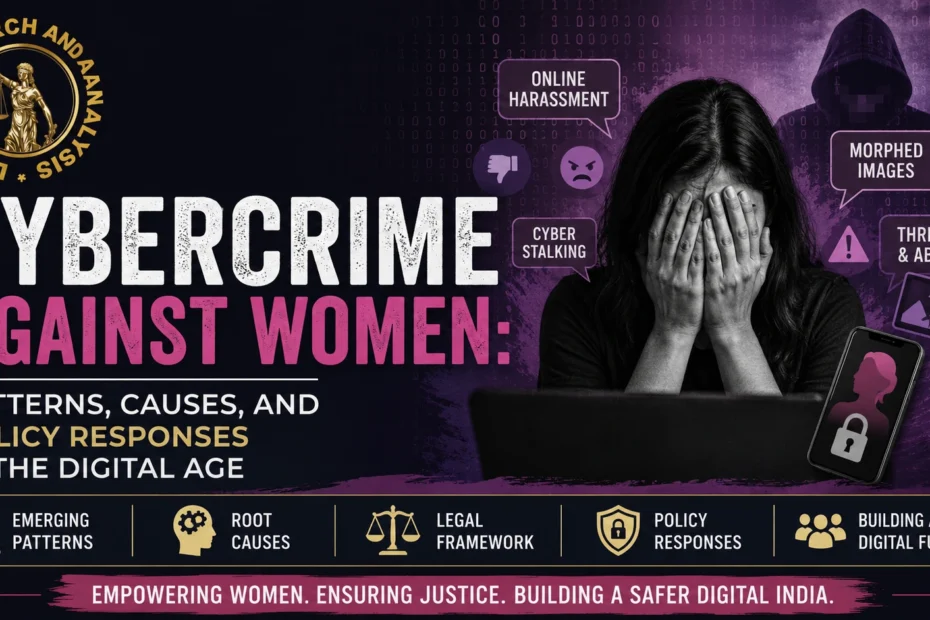
CYBERCRIME AGAINST WOMEN: PATTERNS, CAUSES, AND POLICY RESPONSES IN THE DIGITAL AGE VOLUME 3 ISSUE 2 SUSMITA GANGADHAR Full Text…
LRA Legal Services Pvt. Ltd. (CIN: U85499UP2024PTC207221) | DPIIT-Recognized Startup | Copyright © 2026